
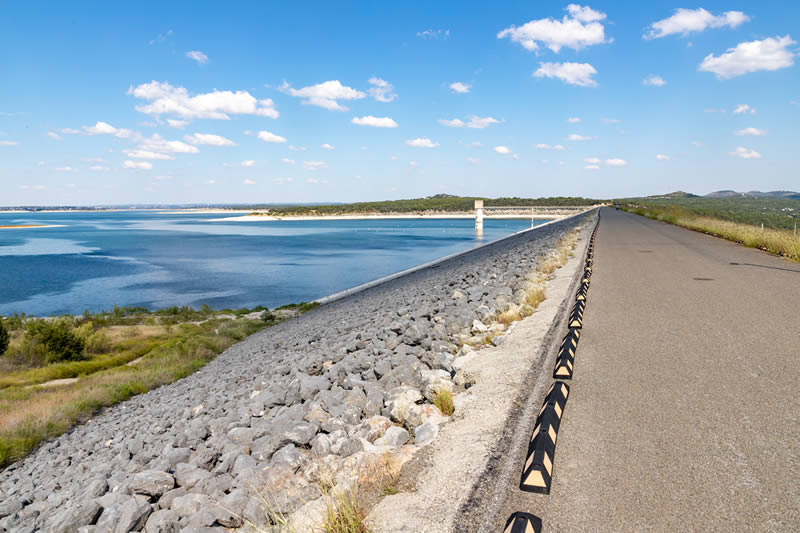
The number of dams in the United States at risk of overtopping is increasing, threatening their structural integrity and downstream businesses and communities, according to new research from the FAMU-FSU College of Engineering.
The study, published in Nature Communications, examined data from 33 dams over 50 years to determine how overtopping probability changed since 1973. The research found an increasing trend in the number of dams exhibiting critical overtopping probabilities (low, moderate, and high) and a decline in the number of dams with non-critical overtopping probabilities (very low).
“Decades ago, dam builders used the best available technology knowledge, but things have been changing, so aging infrastructure is something that is a concern,” said paper co-author Ebrahim Ahmadisharaf, an assistant professor in the FAMU-FSU College of Engineering and the Resilient Infrastructure and Disaster Response Center. “In this study, we showed where hazards from overtopping are greatest, both because of risk of occurrence and possible consequences. It is a guide to where infrastructure spending could have the greatest impact.”
There are more than 90,000 dams of varying sizes in the United States. The researchers narrowed their study to a smaller subset of about 130 sites that had at least 50 years of publicly available water level data. From this subset, they excluded dams influenced by upstream regulation or those with water level data lacking statistical independence. That left them with 33 sites for their study.
The team analyzed water level data from various dams and compared that information with the dam crest height. They examined every 30-year period within the larger 50 years of data to estimate how the probability of overtopping changed over time.
Of the 33 dams studied, 30 dams were classified as large, with crest heights greater than 15 meters, according to the criteria by the International Commission on Large Dams. 31 dams were also classified as ‘high hazard’ by the Federal Emergency Management Agency (FEMA), meaning their failure could result in loss of life.
The six dams with the highest probability and the closest downstream cities are located in Texas, Kansas and California. These are:
- Canyon Dam: New Braunfels, Texas
- Kanopolis Dam: Marquette, Kansas
- Milford Dam: Junction, Kansas
- Somerville Dam: Somerville, Texas
- Whiskeytown Dam: Anderson, California
- Whitney Dam: Waco, Texas
“We have to plan upfront for this potential risk,” Ahmadisharaf said. “This information can help dam managers to consider whether they need to revisit their emergency action plans and strategy for operating dams.”





