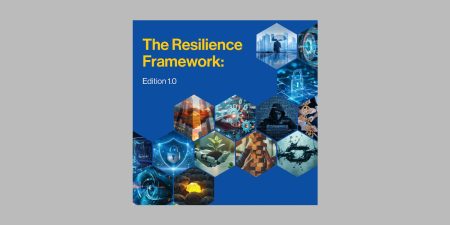
During the recent BCI World hybrid event, the BCI released the Resilience Framework Edition 1.0, which offers a strategic structure that organizations can use to enhance their resilience via eight core principles.

During the recent BCI World hybrid event, the BCI released the Resilience Framework Edition 1.0, which offers a strategic structure that organizations can use to enhance their resilience via eight core principles.

Kyndryl has released findings from its global ‘Cyber Gauge 2024: Navigating the complex cybersecurity landscape’ survey, conducted with Amazon Web Services (AWS).

For leaders to avoid letting panic take over in difficult or uncertain situations, they need to look past traditional coping methods and instead focus on mastering our mental and emotional capabilities, according to a new study from ESSEC Business School.

CSA (the Cloud Security Alliance) has released a new guidance document for organizational governance of artificial intelligence.

During a speech entitled ‘The art of bending without breaking – banking on operational resilience’ Frank Elderson, Member of the Executive Board of the ECB and Vice-Chair of the Supervisory Board of the ECB, has set out the European Central Bank’s current view on operational resilience regulation.

According to the latest Airmic Big Question poll, which looked at organizational ownership of AI risk, equal numbers of respondents said the CEO or the CISO is the primary owner. This points to some lack of clarity as to whether AI risk is a business or a technology governance area.

Lack of challenge to risk management and compliance decisions is a risk in its own right, with teams failing to challenge bad decisions if the setting it not conducive to this.

The Institute of Directors New Zealand has released a new resource to help boards understand AI. The guide aims to help directors develop and improve governance and risk management of this area.

According to a new report from Accenture, ‘Change Reinvented: A New Blueprint for Continuous, Meaningful, Successful Change’, the vast majority of global organizations (96%) are planning to invest more than 5% of their total revenues in change initiatives over the next three years.

New research has found that 78% of chief internal auditors believe AI will negatively impact cyber security and data security, while 58% say it will exacerbate fraud.