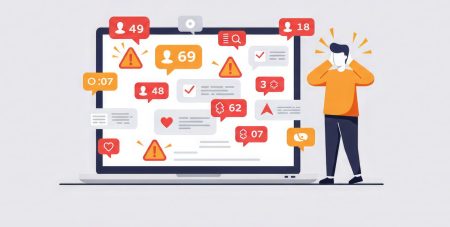
CISOs and their teams are constantly monitoring their tech estates to detect potential cyberattacks but, even so, attacks can be missed or detection delayed. One of the major causes of organizations’ lack of detection remains alert fatigue.

CISOs and their teams are constantly monitoring their tech estates to detect potential cyberattacks but, even so, attacks can be missed or detection delayed. One of the major causes of organizations’ lack of detection remains alert fatigue.

At the heart of organizational resilience is developing the ability to adapt to ensure competitive advantage in an uncertain world.

Terry Storrar explains what data gravity is, why it has developed, and why it can have an impact on business continuity provision.

Fundamentally, there are four types of open source risk: licence conflicts, unpatched vulnerabilities, origin issues, and obsolete or unmaintained code. Many organizations don’t realise just how pervasive open source is within the software used throughout the enterprise.
Mohammad Ismail says that businesses must stop regarding API security as simply a matter of discovery.

David Honour explores what the Dark Triad looks like in reality, the advantages and disadvantages that these traits bring, how to identify leaders who exhibit them, and how organizations can both leverage and contain them.

Sean Lyons explores value destruction, a neglected area in value dynamics, and looks at how AI is changing the threat.

A breakthrough in mathematical physics could reshape how risk and resilience professionals think about uncertainty.
Both business continuity and IT professionals have a role to play in resilience, but how do we improve working partnerships in this area? Rachael Elliott explores this increasingly important area.
Jim Lippie explores a report from Kaseya that reveals a troubling disconnect between SaaS adoption rates and security preparedness.