Close Menu
  • Home
  • Managing resilience
    • AI resilience
    • Business continuity
    • Business resilience
    • Climate resilience
    • C-suite and the board
    • DORA – the EU Digital Operational Resilience Act
    • Operational resilience
    • Organizational resilience
    • Supply chain resilience
    • Technology
  • Risk
    • Enterprise risk management
    • Operational risk
    • Threatscape
  • Cyber resilience
    • Cyber resilience updates
    • DORA – the EU Digital Operational Resilience Act
    • Product updates
More items
  • All News
  • Research
  • Jobs in Resilience
  • Resilience Resources
  • About Resilience Forward
X (Twitter) LinkedIn
  • Home
  • Managing resilience
    • AI resilience
    • Business continuity
    • Business resilience
    • Climate resilience
    • C-suite and the board
    • DORA – the EU Digital Operational Resilience Act
    • Operational resilience
    • Organizational resilience
    • Supply chain resilience
    • Technology
  • Risk
    • Enterprise risk management
    • Operational risk
    • Threatscape
  • Cyber resilience
    • Cyber resilience updates
    • DORA – the EU Digital Operational Resilience Act
    • Product updates
Login
LinkedIn Bluesky
Resilience Forward
Subscribe Now
  • All News
  • Research
  • Jobs in Resilience
  • Resilience Resources
  • About Resilience Forward
Resilience Forward
You are at:Home»Cyber resilience»The role of insurance in climate resilience and adaptation
Cyber resilience

The role of insurance in climate resilience and adaptation

December 19, 20234 Mins Read
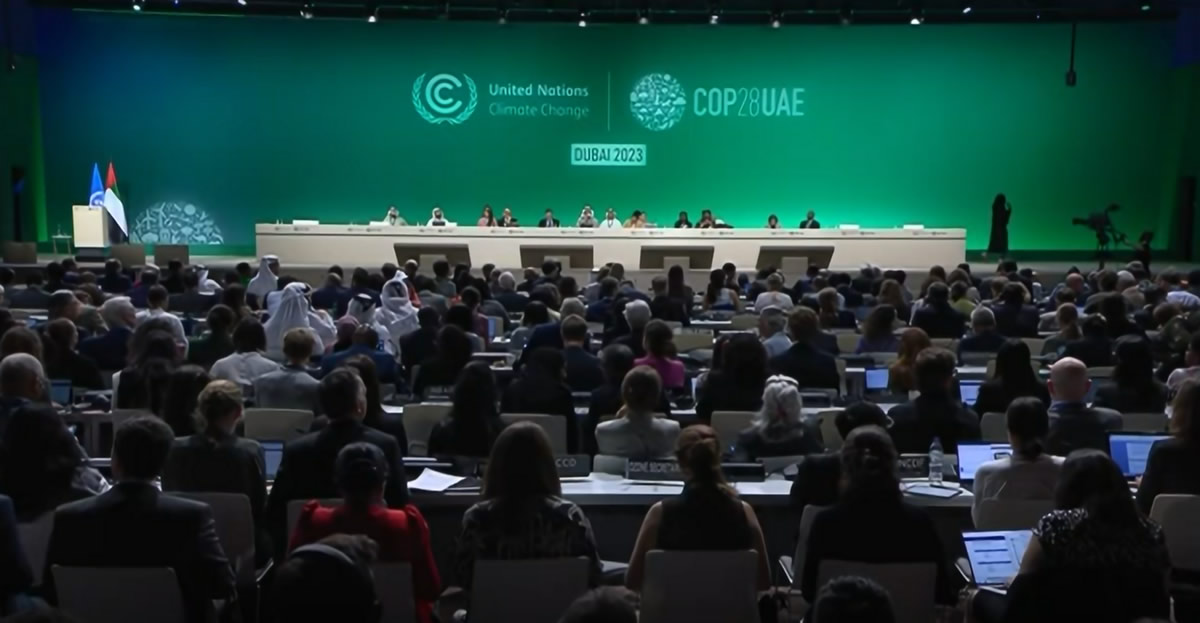
A screen grab from a UNIFEED video of the closing session of the COP28

Throughout the recent COP28, the Insurance Development Forum (IDF) contributed to the discussions and advocated for the critical role of insurance in addressing the climate crisis. The organization says that during the event IDF and its partners ‘witnessed a groundbreaking shift in the recognition of the role of insurance in strengthening resilience and adaptation’.

For the IDF, COP28 served as a pivotal moment, reflecting the organization’s commitment to drive resilience and adaptation through leveraging insurance and its related risk management capabilities. The IDF pursued three core objectives during the conference:

Showcasing Solutions: the IDF spotlighted various initiatives, including country-led implementations through the Tripartite Agreement, support for the Global Shield against Climate Risks, and launch of the IDF-convened Resilient Planet Data Hub. These initiatives demonstrate tangible solutions for tackling the climate crisis.

Building Partnerships: IDF representatives actively engaged in open dialogue, hosting roundtables, joining panel discussions, and engaging in multiple bilaterals that fostered partnerships with governments, industry members, and partners across civil society, academia, and international organizations.

Shaping Public Policy: the IDF played a key role in shaping public policy through jointly hosting/convening over 25 events, including high-level discussions on early action, financial strategies, and partnerships for development.

IDF states that as a result of the above it has been able to deliver and support the following developments during COP28: 

    Risk analytics

    • Contributing to the operationalization of the Global Shield against Climate Risks with the Global Risk Modelling Alliance (GRMA) programme, with Ghana highlighted as an in-country ongoing success story and sharing their experiences so far. The Global Risk Modelling Alliance (GRMA) was initiated by the IDF industry members and implemented in partnership with the Vulnerable 20 Group of Finance Ministers of the Climate Vulnerable Forum (V20) and German Federal Ministry for Economic Cooperation and Development (BMZ). This programme, initiated by the IDF and continuously supported by industry members – AIG, Aon, AXA, AXIS Capital, Convex, RenaissanceRe, SCOR, Guy Carpenter, and Howden – provides access to insurance risk analytics expertise to help develop risk insight in climate-vulnerable countries. The GRMA’s work in Ghana showcased the value of working with the IDF and GRMA to fill risk information gaps, and how risk insight can be deployed for the protection of property and livelihoods in both urban and rural regions.
    • Announcement of The Resilient Planet Data Hub (RPDH), an open, resilience data service developed by the Global Resilience Index Initiative. Founded by the IDF, University of Oxford and UN Office for Disaster Risk Reduction, the RPDH was developed to fix the information gap in the face of climate and disaster risks under the UN headings of People, Planet and Prosperity. The RPDH is a completely open resource, and is the first tangible component of the wider Resilient Planet Initiative led by the UN Climate Champions. The RPDH includes access to the Global Resilience Index Risk Viewer, a portal offering multi-hazard, globally consistent risk and resilience data under current and future climate conditions. It also offers detailed case studies to demonstrate real-world application for users in sovereign governments, financial institutions, investors and regulators.

    Financial protection

    • Country representatives from Colombia, Ghana and Nigeria shared their experiences with the IDF, UNDP and BMZ Tripartite Programme  at different sessions during COP28, highlighting its relevance to issues from food security to disaster preparedness and more. The Inclusive Insurance Roadmap Initiative in Kenya was also showcased as part of the country-led work under the Tripartite programme.
    • The Tripartite Programme is an unprecedented partnership between the insurance industry and the United Nations. The Tripartite programme has successfully rolled out projects to scale up climate and disaster risk finance and insurance solutions for poor and vulnerable people in more than 20 countries, with expected beneficiaries of minimum 64 million, all underpinned by an offered risk-capacity of US$ 5 billion from the IDF’s insurance industry members.
    • Supporting the efforts of public sector partners who announced commitments to pre-arranged financing, including premium financing support for vulnerable countries.
    • Engaging with the Humanitarian community and showcasing innovative programmes with START Network, and others and where insurance capabilities are being deployed and leveraged in innovative ways to reach those who are already at the forefront of the climate crisis.

    Advocacy and engagement

    In line with efforts to continue to shape policy, the IDF also supported the:  

    • Call to action: Getting Ahead of Disasters: Launch of a Charter on Finance for Managing Risks
    • Call for Collaboration: Enhancing the enabling environment to accelerate the mobilisation of private finance for adaptation and resilience supported by the Government of Austria, the Government of Chile, the Government of Colombia, the Government of Guatemala, and the Government of Switzerland. 

    And contributed toward the following reports: 

    • Race to Resilience campaign progress report
    • Building a Climate Resilient Future
    Africa Asia Asia Pacific Australasia Europe Middle East North America UK
    Share. Facebook Twitter Pinterest LinkedIn Tumblr Email WhatsApp
    Previous ArticleThird-party cybersecurity risk management impacts examined
    Next Article Exploring organizational resilience as an emergent property

    Related Posts

    An upward trending arrow.

    Organizations are being forced to rethink resilience strategies, finds State of IT Infrastructure Resilience study

    November 13, 2026
    Error page: 'This site can't be reached' message from a browser, indicating connection closed and suggesting checks (reload button visible).

    Microsoft outage demonstrates the realities of concentration risks

    November 13, 2026
    The numbers 2027 with the 0 replaced with an AI symbol.

    From hype to control: AI security, risk management, and governance in 2027

    November 13, 2026
    Geopolitical risks

    Geopolitical conflict is increasingly reshaping how organizations manage people, operations, and risk

    November 9, 2026
    Abstract network of interconnected nodes and lines in blue.

    Everbridge publishes its 2027 Global Risk & Resilience Outlook

    November 9, 2026
    AI agent in action concept.

    Lack of clear activity baselines makes it harder to manage AI agent resilience and security

    November 9, 2026
    Advertisement
    Resilience First
    This week's most read articles
    AI agent in action concept.

    Lack of clear activity baselines makes it harder to manage AI agent resilience and security

    November 9, 2026
    Two different jigsaw pieces.

    KPMG Risk & Resilience Survey finds that half of organizations have yet to integrate risk and resilience management

    March 12, 2025
    A swirl of sand around a rock to show the concept of flexibility.

    Organizational flexibility:  developing and managing the ability to be flexible

    July 2, 2026
    Latest resources
    A defrosting retail fridge with water dripping out of the bottom and condensation on the glass.

    Protective responses to the refrigeration attacks in Europe

    November 4, 2026
    Load More

    Subscribe to Updates

    Get our Resilience Updates newsletter.

    Most Popular Feature Articles
    Five stage crisis management framework

    A five stage framework for a crisis management process

    Three dark coloured light bulbs on a black background illustrate the concept of The Dark Triad in Crisis Management.

    The Dark Triad in crisis management

    Blue interconnected gears and network nodes symbolizing automation and complex machinery.

    Agent zero – the 2028 digital pandemic

    Latest Reports
    An AI agent icon lying on its side with eyes shut showing the concept of a deactivated agent.

    New report reveals major operational resilience gaps in agentic AI adoption

    Two hands form a rectangular frame around the sun in a bright sky over distant mountains.

    BCI Future of Resilience Report points to a more strategic future for resilience

    Global risks concept

    UN report warns that the global risk landscape is being redrawn

    A promo box for an article about resilience governance.
    © 2026 Resilience Forward
    • About Resilience Forward
    • Newsletter
    • Newsfeed
    • Advertise
    • Call for Papers
    • Contact
    • Privacy Policy and Cookie Use
    • AI Use Policy

    Type above and press Enter to search. Press Esc to cancel.

    Manage Cookie Consent
    To provide the best experiences, we use technologies like cookies to store and/or access device information. Consenting to these technologies will allow us to process data such as browsing behaviour or unique IDs on this site. Not consenting or withdrawing consent, may adversely affect certain features and functions.
    Functional Always active
    The technical storage or access is strictly necessary for the legitimate purpose of enabling the use of a specific service explicitly requested by the subscriber or user, or for the sole purpose of carrying out the transmission of a communication over an electronic communications network.
    Preferences
    The technical storage or access is necessary for the legitimate purpose of storing preferences that are not requested by the subscriber or user.
    Statistics
    The technical storage or access that is used exclusively for statistical purposes. The technical storage or access that is used exclusively for anonymous statistical purposes. Without a subpoena, voluntary compliance on the part of your Internet Service Provider, or additional records from a third party, information stored or retrieved for this purpose alone cannot usually be used to identify you.
    Marketing
    The technical storage or access is required to create user profiles to send advertising, or to track the user on a website or across several websites for similar marketing purposes.
    • Manage options
    • Manage services
    • Manage {vendor_count} vendors
    • Read more about these purposes
    View preferences
    • {title}
    • {title}
    • {title}
    Ad Blocker Enabled!
    Ad Blocker Enabled!
    Our website is made possible by displaying online advertisements to our visitors. Please support us by disabling your Ad Blocker.

    Sign In or Register

    Welcome Back!

    Login to your account below.

    Lost password?