
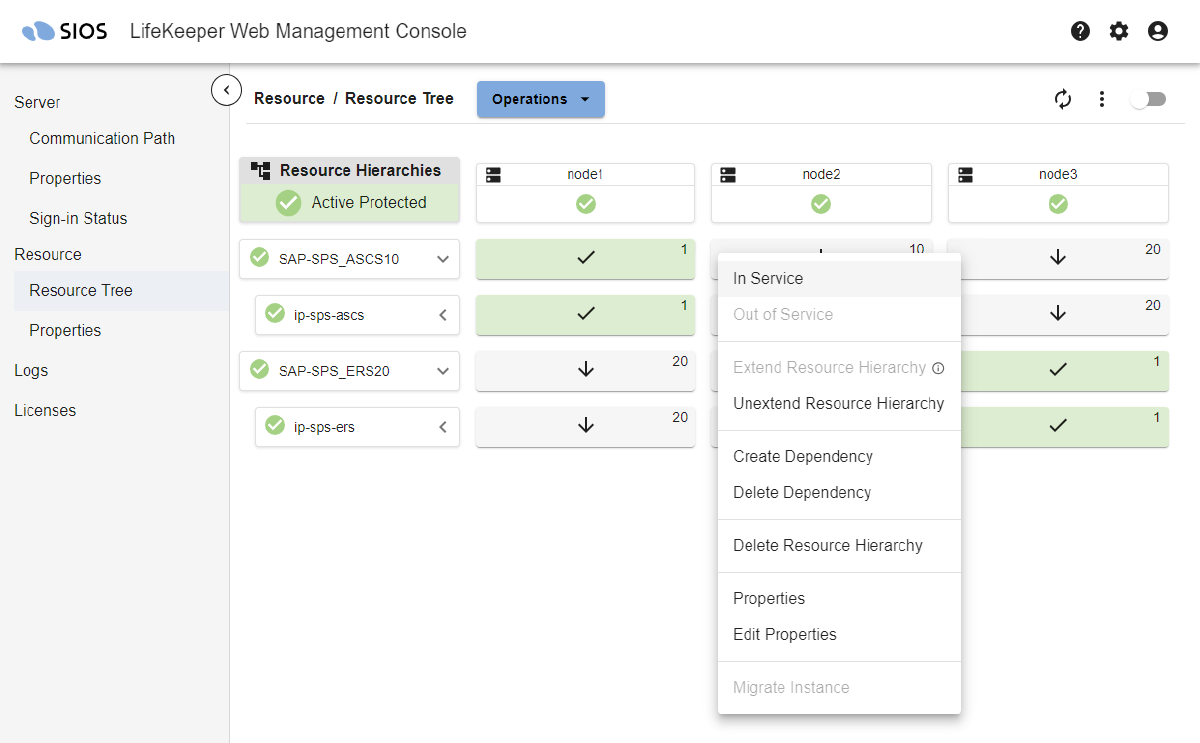
SIOS Technology Corp. has announced the latest version of SIOS LifeKeeper for Linux featuring a new Web Management Console that simplifies the way IT administrators deploy and manage high availability clusters.
In today’s tech-driven landscape, organizations increasingly rely on enterprise-class applications, databases and ERPs such as SAP, HANA, and Oracle; and the demand for robust high availability and disaster recovery (HA/DR) solutions for these has become paramount. However, many organizations lack in-house IT resources with the specialized skills necessary to manage the complex scripting and manual interventions required by these environments. Even a momentary lapse in system functionality can result in significant financial costs and reputational damage. Consequently, companies are seeking innovative technologies that offer protection without requiring advanced IT expertise. The introduction of the SIOS LifeKeeper Web Management Console marks a pivotal moment in the pursuit of simpler, more comprehensive application HA/DR, says SIOS Technology.
The new SIOS LifeKeeper Web Management Console is the first step in realizing our vision of empowering IT administrators with simple, holistic application HA/DR. It lays the groundwork for future innovations that will dramatically improve the way companies implement and manage HA/DR.
Masahiro Arai, Chief Operating Officer, SIOS Technology
The new LifeKeeper Web Management Console (LKWMC) in SIOS LifeKeeper for Linux features:
- Enhanced ease-of-use: system administrators gain simplified processes and intuitive interfaces save time and reduce errors in configuration and ongoing management, particularly in cloud environments;
- Set up progress tracking: enables administrators to monitor the installation process in real-time for seamless, error-free deployment;
- Self-help ‘information cues’: intuitive cues offer self-help functionality for key system features, simplifying configuration and management;
- Self-contained solution: a self-contained system simplifies the deployment process and reduces maintenance overhead; it eliminates the need for Java or X Window System installation on the server;
- Language localization: with support initially available in both Japanese and English, language localization caters to a diverse global user base;
- Simplified firewall management: requiring only 2 TCP ports, enhances security without compromising accessibility;
- Responsive design: seamless access and functionality across a range of devices, including tablets and smartphones; and
- Broader support: support for leading platforms, operating systems, and enhanced SAP integration, for unparalleled versatility and compatibility.





