Close Menu
  • Home
  • Managing resilience
    • AI resilience
    • Business continuity
    • Business resilience
    • Climate resilience
    • C-suite and the board
    • DORA – the EU Digital Operational Resilience Act
    • Operational resilience
    • Organizational resilience
    • Supply chain resilience
    • Technology
  • Risk
    • Enterprise risk management
    • Operational risk
    • Threatscape
  • Cyber resilience
    • Cyber resilience updates
    • DORA – the EU Digital Operational Resilience Act
    • Product updates
More items
  • All News
  • Research
  • Jobs in Resilience
  • Resilience Resources
  • About Resilience Forward
X (Twitter) LinkedIn
  • Home
  • Managing resilience
    • AI resilience
    • Business continuity
    • Business resilience
    • Climate resilience
    • C-suite and the board
    • DORA – the EU Digital Operational Resilience Act
    • Operational resilience
    • Organizational resilience
    • Supply chain resilience
    • Technology
  • Risk
    • Enterprise risk management
    • Operational risk
    • Threatscape
  • Cyber resilience
    • Cyber resilience updates
    • DORA – the EU Digital Operational Resilience Act
    • Product updates
Login
LinkedIn Bluesky
Resilience Forward
Subscribe Now
  • All News
  • Research
  • Jobs in Resilience
  • Resilience Resources
  • About Resilience Forward
Resilience Forward
You are at:Home»Managing resilience»Climate resilience»Saffir-Simpson Windscale needs to be extended for Category 6 hurricanes
Climate resilience

Saffir-Simpson Windscale needs to be extended for Category 6 hurricanes

February 6, 20243 Mins Read
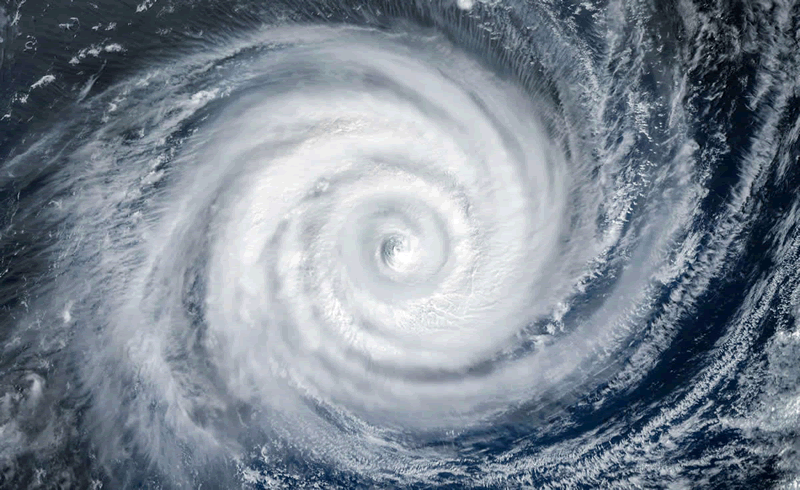
A major hurricane from above.

The Saffir-Simpson Windscale is used to label a hurricane on a scale from Category 1 to Category 5. Now climate scientists are suggesting that it may need updating to account for the potential for hurricanes beyond Category 5.

Climate scientists Michael Wehner of Lawrence Berkeley National Laboratory (Berkeley Lab) and James Kossin of the First Street Foundation make the suggestion following extensive research, the results of which have been published in the Proceedings of the National Academy of Sciences (PNAS). The paper, ‘The growing inadequacy of an open-ended Saffir–Simpson hurricane wind scale in a warming world’, introduces a hypothetical Category 6 to the Saffir-Simpson Wind Scale, which would encompass storms with wind speeds greater than 192 mph. 

“Our motivation is to reconsider how the open-endedness of the Saffir-Simpson Scale can lead to underestimation of risk, and, in particular, how this underestimation becomes increasingly problematic in a warming world,” said Wehner, who has spent his career studying the behavior of extreme weather events in a changing climate and to what extent human influence has contributed to individual events.

According to Wehner, anthropogenic global warming has significantly increased surface ocean and tropospheric air temperatures in regions where hurricanes, tropical cyclones, and typhoons form and propagate, providing additional heat energy for storm intensification.

When the team performed a historical data analysis of hurricanes from 1980 to 2021, they found five storms that would have been classified as Category 6, and all of them occurred in the last nine years of record. They determined a hypothetical upper bound for Category 5 hurricanes by looking at the expanding range of wind speeds between the lower-category storms.

In addition to studying the historical record, the researchers analyzed simulations to explore how warming climates would impact hurricane and typhoon intensification. Their models showed that with two degrees Celsius of global warming above pre-industrial levels, the risk of Category 6 storms increases by up to 50% near the Philippines and doubles in the Gulf of Mexico and that the highest risk of these storms is in Southeast Asia, the Philippines, and the Gulf of Mexico.

Tropical cyclone risk messaging is a very active topic, and changes in messaging are necessary to better inform the public about inland flooding and storm surge, phenomena that a wind-based scale is only tangentially relevant to. While adding a 6th category to the Saffir–Simpson Hurricane Wind Scale would not solve that issue, it could raise awareness about the perils of the increased risk of major hurricanes due to global warming.

James Kossin

Read the paper
Asia Pacific North America
Share. Facebook Twitter Pinterest LinkedIn Tumblr Email WhatsApp
Previous ArticleMajority of companies cannot restore their business processes within three days of a ransomware attack
Next Article Building an antifragile supply chain: a capability blueprint for resilience and post-disruption growth

Related Posts

A solar farm with associated wind turbines.

The resilience challenges of the renewable energy transition

October 2, 2026
Sovereign cloud concept - a digital map of the world is overlaid with multiple cloud icons of different sizes.

Sovereignty and resilience: considerations for organizational leaders

October 2, 2026
A medical worker in a hazmat suit responds to a pandemic victim.

UN pandemic meeting renews preparedness calls but fails to agree declaration

October 1, 2026
Cloned website images overlaid with phishing icons.

Organizational impersonation ranks as top online IP concern: with significant business impacts

October 1, 2026
AI resilience concept.

Survey highlights measures that organizations are considering for improved AI resilience

October 1, 2026
Fragility concept - a human head made up of jigsaw pieces starts to dissolve.

AI efficiency gains can increase organizational fragility

October 1, 2026
Advertisement
Resilience First
This week's most read articles
Open lorry car trunk full of moving cardboard boxes and furniture outdoors at city street.

HP Wolf study finds growing concern about attacks on hardware supply chains

August 6, 2024
A solar farm with associated wind turbines.

The resilience challenges of the renewable energy transition

October 2, 2026
Five stage crisis management framework

A five stage framework for a crisis management process

April 2, 2025
Latest resources
DRJ and BCI logos

DRJ and BCI publish guidance for governing, managing, and using AI in resilience

September 7, 2026
Load More

Subscribe to Updates

Get our Resilience Updates newsletter.

Most Popular Feature Articles
Three dark coloured light bulbs on a black background illustrate the concept of The Dark Triad in Crisis Management.

The Dark Triad in crisis management

Five stage crisis management framework

A five stage framework for a crisis management process

Blue interconnected gears and network nodes symbolizing automation and complex machinery.

Agent zero – the 2028 digital pandemic

Latest Reports
Global risks concept

UN report warns that the global risk landscape is being redrawn

Three blank wooden signs against a blue sky.

System restoration is not business continuity: research finds that ‘most cyber recovery plans are built for the wrong outcome’

BCI Continuity and Resilience Report 2026 cover.

BCI report sees growing structural divide between business continuity and resilience

A promo box for an article about resilience governance.
© 2026 Resilience Forward
  • About Resilience Forward
  • Newsletter
  • Newsfeed
  • Advertise
  • Call for Papers
  • Contact
  • Privacy Policy and Cookie Use
  • AI Use Policy

Type above and press Enter to search. Press Esc to cancel.

Manage Cookie Consent
To provide the best experiences, we use technologies like cookies to store and/or access device information. Consenting to these technologies will allow us to process data such as browsing behaviour or unique IDs on this site. Not consenting or withdrawing consent, may adversely affect certain features and functions.
Functional Always active
The technical storage or access is strictly necessary for the legitimate purpose of enabling the use of a specific service explicitly requested by the subscriber or user, or for the sole purpose of carrying out the transmission of a communication over an electronic communications network.
Preferences
The technical storage or access is necessary for the legitimate purpose of storing preferences that are not requested by the subscriber or user.
Statistics
The technical storage or access that is used exclusively for statistical purposes. The technical storage or access that is used exclusively for anonymous statistical purposes. Without a subpoena, voluntary compliance on the part of your Internet Service Provider, or additional records from a third party, information stored or retrieved for this purpose alone cannot usually be used to identify you.
Marketing
The technical storage or access is required to create user profiles to send advertising, or to track the user on a website or across several websites for similar marketing purposes.
  • Manage options
  • Manage services
  • Manage {vendor_count} vendors
  • Read more about these purposes
View preferences
  • {title}
  • {title}
  • {title}
Ad Blocker Enabled!
Ad Blocker Enabled!
Our website is made possible by displaying online advertisements to our visitors. Please support us by disabling your Ad Blocker.

Sign In or Register

Welcome Back!

Login to your account below.

Lost password?