
FusionAuth’s 2026 State of AI and Identity Report finds that nearly two-thirds of organizations have experienced a confirmed AI identity breach in the past year, and among those who feel most secure, the rate jumps to 84%.

All the latest resilience and risk management news from around the world.
FusionAuth’s 2026 State of AI and Identity Report finds that nearly two-thirds of organizations have experienced a confirmed AI identity breach in the past year, and among those who feel most secure, the rate jumps to 84%.

Jamf has released findings from a survey of 687 IT and security leaders that reveal a growing challenge for organizations adopting AI: as might be expected, the more deeply AI becomes embedded into daily work, the more AI-related incidents occur.
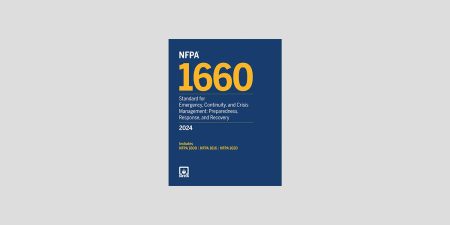
NFPA is seeking public comments on the second draft of the revision to the NFPA 1660 Standard for Emergency, Continuity, and Crisis Management.

Anthropic has published an Advanced AI Framework which includes proposals for how governments should address catastrophic risks from the most powerful AI models.

In its inaugural 2026 Lateral Movement Exposure Report, Zero Networks states that 80% of enterprise servers are reachable from anywhere inside the network – creating ‘greenfield conditions’ for ransomware, operational disruption, and full-environment compromise.

The UK Health Security Agency (UKHSA) has released its first Health Security Risk Assessment, which assesses the most significant health security risks facing the UK over the next five years.

Hostile vehicle mitigation is now familiar around high-profile sites, but the next challenge may come from above. As drone capability advances, organizations need to consider how prepared they are for hostile activity in the low-altitude airspace around their facilities.

Rachael Elliott looks at why supply chain management needs a strategic approach to resilience to deal with long term issues and short term shocks.

Veeam Software has published new global research, the ‘Data and AI Trust Gap’ report. This exposes a ‘stark and widening gap at the heart of enterprise AI’.

AlertMedia has released ‘The Security Maturity Benchmark Report’, a new research study examining the operational, organizational, and technology factors that determine whether security programmes can effectively withstand today’s evolving threat landscape.