
A new academic research paper published by Chatham House explores international AI governance and concludes that it is at risk of failure.

AI resilience is the capacity of an organization to anticipate, withstand, respond to and adapt to disruption or harm involving artificial intelligence – whether caused by system failure, unreliable outputs, malicious manipulation, misuse, supplier dependency or wider systemic effects – while maintaining critical outcomes and recovering safely within acceptable limits.
AI resilience encompasses both:
– The resilience of AI systems themselves; and
– The resilience of the organization when AI systems become unavailable, degraded, unreliable or unsafe.
Organizational capabilities supporting AI resilience include effective governance and human oversight, understanding operational dependencies, contingency arrangements, exercising, recovery, learning and adaptation.
A new academic research paper published by Chatham House explores international AI governance and concludes that it is at risk of failure.

Tom Pepper explores why generic AI policies often fail at the executive level and how to implement a practical framework for human-in-the-loop decision-making and accountability.

CultureAI has released a new report, ‘The State of Enterprise AI Usage: The Illusion of Control’. This shows that organizations are struggling with AI governance and visibility, with 65% of organizations detecting unauthorised shadow AI.

Salt Security is warning that the new Moltbook platform, which recently hit the headlines in global media, and OpenClaw (formerly Clawdbot) agent framework offer a real-world preview of the next major enterprise security blind spot.

Enterprises deploying AI systems with excessive permissions are experiencing 4.5x more security incidents than those that enforce least-privilege controls according to a new research report from Teleport.
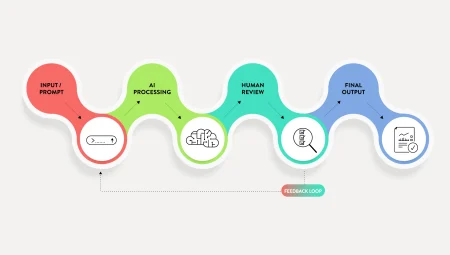
Strategic discussions about AI often centre on workforce restructuring and automation. A more immediate enterprise risk is emerging: failure to design effective human-in-the-loop (HiTL) operating models.

Daoud Abdel Hadi examines how rising regulatory scrutiny is pushing banks and other financial institutions to embed explainability and accountability into AI-driven compliance systems.
Mark Scrivens looks at what technology leaders will need to consider to enable their organizations to make the most of agentic AI opportunities.

There seems little doubt that AI agents will be transformational for organizational operations in 2026, but their trusted status requires strong API governance to ensure safe use.

In 2026, agentic AI will pull businesses back into an experimental phase, where the risks rise as fast as the opportunities.