Close Menu
  • Home
  • Managing resilience
    • AI resilience
    • Business continuity
    • Business resilience
    • Climate resilience
    • C-suite and the board
    • DORA – the EU Digital Operational Resilience Act
    • Operational resilience
    • Organizational resilience
    • Supply chain resilience
    • Technology
  • Risk
    • Enterprise risk management
    • Operational risk
    • Threatscape
  • Cyber resilience
    • Cyber resilience updates
    • DORA – the EU Digital Operational Resilience Act
    • Product updates
More items
  • All News
  • Research
  • Jobs in Resilience
  • Resilience Resources
  • About Resilience Forward
X (Twitter) LinkedIn
  • Home
  • Managing resilience
    • AI resilience
    • Business continuity
    • Business resilience
    • Climate resilience
    • C-suite and the board
    • DORA – the EU Digital Operational Resilience Act
    • Operational resilience
    • Organizational resilience
    • Supply chain resilience
    • Technology
  • Risk
    • Enterprise risk management
    • Operational risk
    • Threatscape
  • Cyber resilience
    • Cyber resilience updates
    • DORA – the EU Digital Operational Resilience Act
    • Product updates
Login
LinkedIn Bluesky
Resilience Forward
Subscribe Now
  • All News
  • Research
  • Jobs in Resilience
  • Resilience Resources
  • About Resilience Forward
Resilience Forward
You are at:Home»Managing resilience»Business continuity»Unplanned downtime in manufacturing companies explored
Business continuity

Unplanned downtime in manufacturing companies explored

November 4, 20252 Mins Read
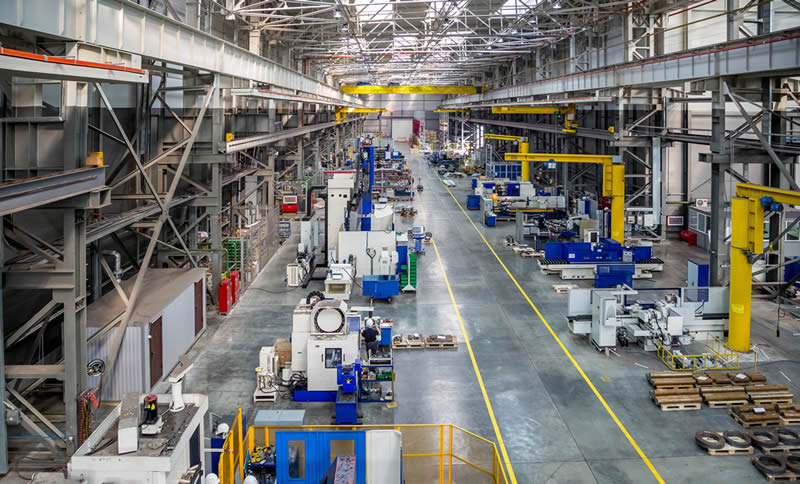
A manufacturing environment.

Fluke Corporation has released survey findings that look at the frequency of unplanned downtime in industrial manufacturing.

The research, conducted by Censuswide, surveyed over 600 senior decision-makers and maintenance professionals in the US, the UK, and Germany.

Combined results show that 48% report six to ten incidents each week, and nearly one in five (19%) face 11 to 20 weekly incidents.

45% of respondents say that outages sometimes last up to 12 hours, while a further 15% experience incidents lasting up to 72 hours.

UK results

Nearly seven in ten (68%) of UK manufacturers suffered unplanned downtime in the past year. Downtime is not only frequent and prolonged, but also reflects vulnerabilities that threaten profitability, competitiveness, and resilience.

Nearly half (46%) report six to ten downtime incidents weekly, while 15% face 11 to 20 incidents weekly.

45% say outages last up to 12 hours; 17% report incidents stretching to 72 hours.

US results

55% of US manufacturers have been hit by unplanned downtime in the past year, and nearly half of US survey participants reported six to ten incidents each week, with almost one in five (19%) facing 11 to 20 incidents weekly.

45% of respondents say outages can last up to 12 hours, while a further 15% experience incidents up to 72 hours.

Resilience investments

The findings show that UK and US manufacturers are spreading investments across multiple solutions to build resilience, including predictive maintenance (12%), digital twins (12%), and condition monitoring (13%).


Europe North America UK
Share. Facebook Twitter Pinterest LinkedIn Tumblr Email WhatsApp
Previous ArticleResilience and digital transformation: lessons from Denmark’s PostNord project
Next Article APRA to consult on changes to CPS 230 for non-traditional service providers

Related Posts

A solar farm with associated wind turbines.

The resilience challenges of the renewable energy transition

October 2, 2026
Sovereign cloud concept - a digital map of the world is overlaid with multiple cloud icons of different sizes.

Sovereignty and resilience: considerations for organizational leaders

October 2, 2026
A medical worker in a hazmat suit responds to a pandemic victim.

UN pandemic meeting renews preparedness calls but fails to agree declaration

October 1, 2026
Cloned website images overlaid with phishing icons.

Organizational impersonation ranks as top online IP concern: with significant business impacts

October 1, 2026
AI resilience concept.

Survey highlights measures that organizations are considering for improved AI resilience

October 1, 2026
Fragility concept - a human head made up of jigsaw pieces starts to dissolve.

AI efficiency gains can increase organizational fragility

October 1, 2026
Advertisement
Resilience First
This week's most read articles
Open lorry car trunk full of moving cardboard boxes and furniture outdoors at city street.

HP Wolf study finds growing concern about attacks on hardware supply chains

August 6, 2024
A solar farm with associated wind turbines.

The resilience challenges of the renewable energy transition

October 2, 2026
Five stage crisis management framework

A five stage framework for a crisis management process

April 2, 2025
Latest resources
DRJ and BCI logos

DRJ and BCI publish guidance for governing, managing, and using AI in resilience

September 7, 2026
Load More

Subscribe to Updates

Get our Resilience Updates newsletter.

Most Popular Feature Articles
Three dark coloured light bulbs on a black background illustrate the concept of The Dark Triad in Crisis Management.

The Dark Triad in crisis management

Five stage crisis management framework

A five stage framework for a crisis management process

Blue interconnected gears and network nodes symbolizing automation and complex machinery.

Agent zero – the 2028 digital pandemic

Latest Reports
Global risks concept

UN report warns that the global risk landscape is being redrawn

Three blank wooden signs against a blue sky.

System restoration is not business continuity: research finds that ‘most cyber recovery plans are built for the wrong outcome’

BCI Continuity and Resilience Report 2026 cover.

BCI report sees growing structural divide between business continuity and resilience

A promo box for an article about resilience governance.
© 2026 Resilience Forward
  • About Resilience Forward
  • Newsletter
  • Newsfeed
  • Advertise
  • Call for Papers
  • Contact
  • Privacy Policy and Cookie Use
  • AI Use Policy

Type above and press Enter to search. Press Esc to cancel.

Manage Cookie Consent
To provide the best experiences, we use technologies like cookies to store and/or access device information. Consenting to these technologies will allow us to process data such as browsing behaviour or unique IDs on this site. Not consenting or withdrawing consent, may adversely affect certain features and functions.
Functional Always active
The technical storage or access is strictly necessary for the legitimate purpose of enabling the use of a specific service explicitly requested by the subscriber or user, or for the sole purpose of carrying out the transmission of a communication over an electronic communications network.
Preferences
The technical storage or access is necessary for the legitimate purpose of storing preferences that are not requested by the subscriber or user.
Statistics
The technical storage or access that is used exclusively for statistical purposes. The technical storage or access that is used exclusively for anonymous statistical purposes. Without a subpoena, voluntary compliance on the part of your Internet Service Provider, or additional records from a third party, information stored or retrieved for this purpose alone cannot usually be used to identify you.
Marketing
The technical storage or access is required to create user profiles to send advertising, or to track the user on a website or across several websites for similar marketing purposes.
  • Manage options
  • Manage services
  • Manage {vendor_count} vendors
  • Read more about these purposes
View preferences
  • {title}
  • {title}
  • {title}
Ad Blocker Enabled!
Ad Blocker Enabled!
Our website is made possible by displaying online advertisements to our visitors. Please support us by disabling your Ad Blocker.

Sign In or Register

Welcome Back!

Login to your account below.

Lost password?