
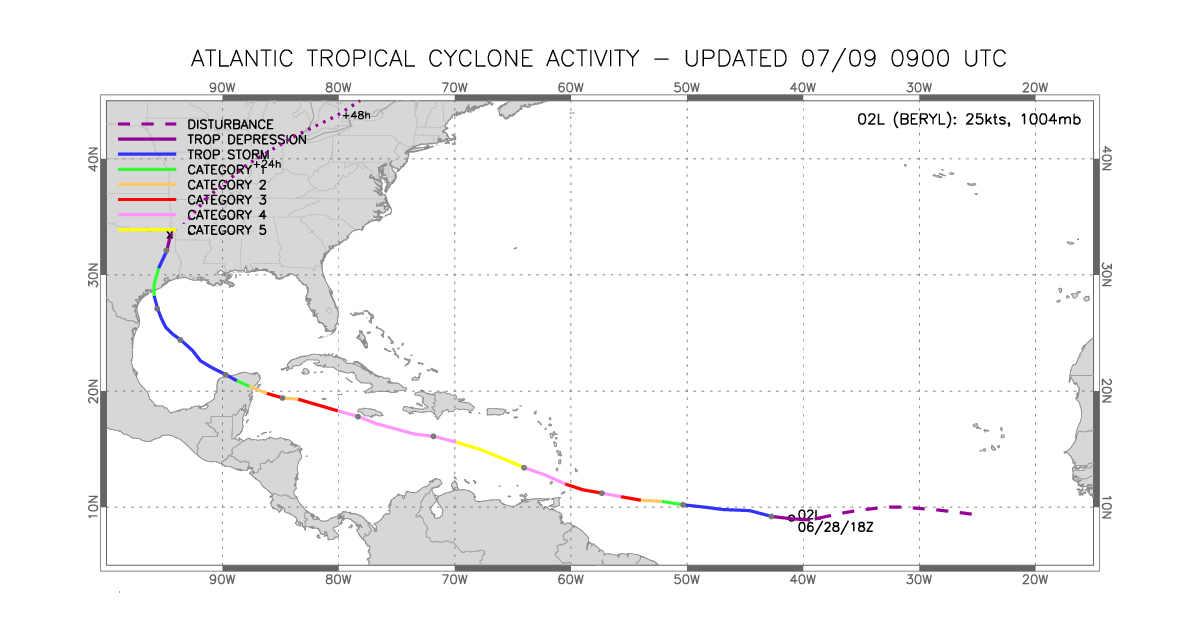
The United Nations Office for Disaster Risk Reduction (UNDRR) says that in the wake of Hurricane Beryl ‘it is clear that we must redouble our efforts to build resilience and preparedness in the face of growing disaster risk’. UNDRR is calling for urgent action on disaster risk reduction to get ahead of growing climate risks.
According to the United States’ National Hurricane Center, Hurricane Beryl became the first-ever Category 4 hurricane to form in June, highlighting an unprecedented early-season intensity in the Caribbean.
We cannot wait for the next disaster to strike before taking action. We have an opportunity in the remaining years of the Sendai Framework to accelerate progress to protect lives, livelihoods, and communities for generations to come.
Kamal Kishore, Special Representative of the UN Secretary-General for Disaster Risk Reduction and the Head of UNDRR
The Sendai Framework for Disaster Risk Reduction 2015-2030 provides UN Member States with concrete actions to protect development gains from the risk of disaster. It advocates for ‘the substantial reduction of disaster risk and losses in lives, livelihoods and health and in the economic, physical, social, cultural and environmental assets of persons, businesses, communities and countries’. The Sendai Framework ‘recognizes that the State has the primary role to reduce disaster risk but that responsibility should be shared with other stakeholders including local government, the private sector and other stakeholders’.
Hurricane Beryl also demonstrates the importance of effective multi-hazard early warning systems to save lives says the UNDRR. Globally, the sustained investments in those systems are making progress in reducing the loss of life in disasters. But economic losses are escalating. Ensuring that infrastructure is resilient and that communities ‘build back better’ in the face of future hazards is essential.





