
The UN Food and Agriculture Organization (FAO) has warned that the global spread of avian influenza (H5N1) has reached unprecedented levels and is calling for global action.
The FAO’s warning is focussed on food security but also highlights that, as H5N1 spreads, so the risk of mutation to a form capable of producing a human pandemic increases.
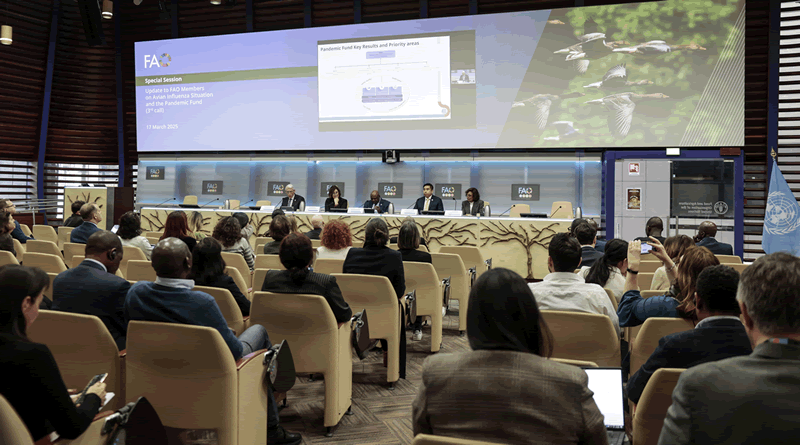
Briefing Member States in Rome on 17th March, FAO officials called for urgent action to strengthen biosecurity, surveillance, and rapid-response mechanisms to curb the outbreak.
FAO Deputy Director-General Godfrey Magwenzi stressed that the crisis threatens to have: “Serious impacts on food security and food supply in countries, including loss of valuable nutrition, rural jobs and income, shocks to local economies, and of course increasing costs to consumers.”
With millions relying on poultry for meat and eggs, the challenge is not only to contain the virus but also to protect food production systems.
The economic impact is also being felt worldwide. For example, egg prices reached a record high in the United States during February according to the US Consumer Price Index, with farmers forced to slaughter over 166 million birds so far in total as avian flu has spread – mostly egg-laying chickens.
So far this year more than 30 million birds in the US have been killed, according to news reports.
During the briefing FAO Deputy Director-General Beth Bechdol underlined the need for a global, coordinated response, calling H5N1 a ‘transboundary threat’ that no country can tackle alone.
To address the crisis, FAO and the World Organisation for Animal Health (WOAH) have launched a ten-year Global Strategy for the Prevention and Control of High Pathogenicity Avian Influenza.
“A chain is only as strong as its weakest link. By working together, we can reduce the impact of avian influenza and protect both animal and human health – locally and globally,” Ms. Bechdol said.
Ms. Bechdol also stressed the importance of private sector engagement, particularly in developing vaccines, diagnostics, and high-quality animal health services.
The briefing also included a third call for funding proposals under the Pandemic Fund, hosted by the World Bank.
Over the past two years, FAO has co-led dozens of Pandemic Fund projects aimed at strengthening disease surveillance, early warning systems, and health infrastructure to prevent future outbreaks.





