
Catchpoint’s second annual Internet Resilience Report shows that trends in the focus of resilience in this area are changing.

Catchpoint’s second annual Internet Resilience Report shows that trends in the focus of resilience in this area are changing.

A new report from SecurityScorecard has revealed a ‘growing crisis’ in supply chain cybersecurity, with five in six organizations now at risk due to immature security practices.

ENISA has published new guidance to support key digital infrastructure and ICT providers in implementing NIS2. The NIS2 Technical Implementation Guidance covers 13 areas, including incident handling and business continuity & crisis management.

As artificial intelligence (AI) transforms enterprise operations – from customer engagement to product innovation – the demand for high-throughput, secure infrastructure has become paramount.
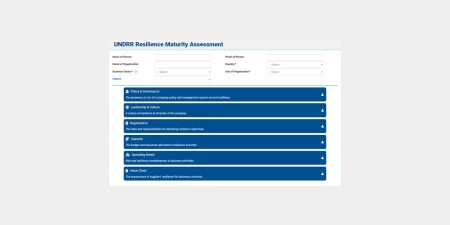
After a period of beta running, the UNDRR has made its new free-to-use Resilience Maturity Assessment (ReMA) tool fully available.

Nearly three quarters of European IT and cybersecurity professionals say employees are already using generative AI at work, but just under a third (31%) of organizations have put formal policies in place to manage the risks in this area.

Accenture’s State of Cybersecurity Resilience 2025 report is based on a survey of 2,286 cybersecurity and technology executives from large organizations around the globe.

Rather than focusing solely on how quickly you can get your business up and running again after an incident, true resilience involves addressing incidents while attempting to maintain business as usual.

The EU Member States, supported by the European Commission, have issued a roadmap and timeline to start using post-quantum cryptography (PQC) to future-proof cyber security.

In an increasingly interconnected and rapidly evolving risk landscape, risk managers must not only confront the challenges it presents but also uncover the opportunities it offers by developing the skill of strategic foresight.