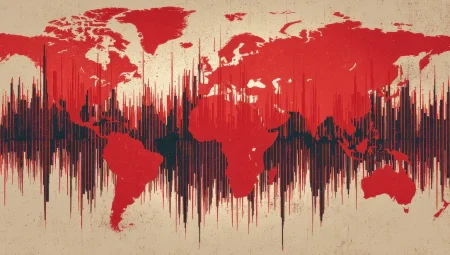
The World Economic Forum has released its annual Global Risks Report, which shows that half of those surveyed anticipate a turbulent or stormy world over the next two years, up 14 percentage points from last year.

The World Economic Forum has released its annual Global Risks Report, which shows that half of those surveyed anticipate a turbulent or stormy world over the next two years, up 14 percentage points from last year.

Zero trust was meant to remove implicit trust, not shift it to vendors. Benjamin Schilz shows how trusted providers can undermine zero-trust architectures.
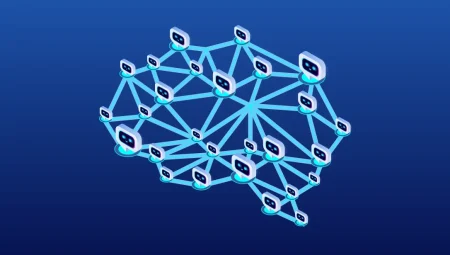
There seems little doubt that AI agents will be transformational for organizational operations in 2026, but their trusted status requires strong API governance to ensure safe use.

Netflix’s Stranger Things is a world where the mundane can suddenly become a portal to the deadly Upside Down, a perfect metaphor for the current state of the Internet of Things (IoT).
This section provides a listing of Resilience Forward stories considering how various areas related to resilience are likely to develop in 2026.

In 2026, organizations will rethink access management around continuous, multi-layered trust. Expect to see ‘multi-factor authentication for life’ take shape…
Vector databases such as Pinecone sit at the heart of modern AI…

In 2026, agentic AI will pull businesses back into an experimental phase, where the risks rise as fast as the opportunities.

Organizations can’t afford cyber security as an afterthought. Cyber resilient by design must become the norm and a principle to which we all lean into.
The draft update of the ISO 22316 Security and resilience — Organizational resilience — Guidelines international standard has now been released for review.