Close Menu
  • Home
  • Managing resilience
    • AI resilience
    • Business continuity
    • Business resilience
    • Climate resilience
    • C-suite and the board
    • DORA – the EU Digital Operational Resilience Act
    • Operational resilience
    • Organizational resilience
    • Supply chain resilience
    • Technology
  • Risk
    • Enterprise risk management
    • Operational risk
    • Threatscape
  • Cyber resilience
    • Cyber resilience updates
    • DORA – the EU Digital Operational Resilience Act
    • Product updates
More items
  • All News
  • Research
  • Jobs in Resilience
  • Resilience Resources
  • About Resilience Forward
X (Twitter) LinkedIn
  • Home
  • Managing resilience
    • AI resilience
    • Business continuity
    • Business resilience
    • Climate resilience
    • C-suite and the board
    • DORA – the EU Digital Operational Resilience Act
    • Operational resilience
    • Organizational resilience
    • Supply chain resilience
    • Technology
  • Risk
    • Enterprise risk management
    • Operational risk
    • Threatscape
  • Cyber resilience
    • Cyber resilience updates
    • DORA – the EU Digital Operational Resilience Act
    • Product updates
Login
LinkedIn Bluesky
Resilience Forward
Subscribe Now
  • All News
  • Research
  • Jobs in Resilience
  • Resilience Resources
  • About Resilience Forward
Resilience Forward
You are at:Home»Risk»Threatscape»Severe convective storm threats have increased significantly – and need new approaches to resilience (Page 21)
Threatscape

Severe convective storm threats have increased significantly – and need new approaches to resilience

April 1, 20264 Mins Read
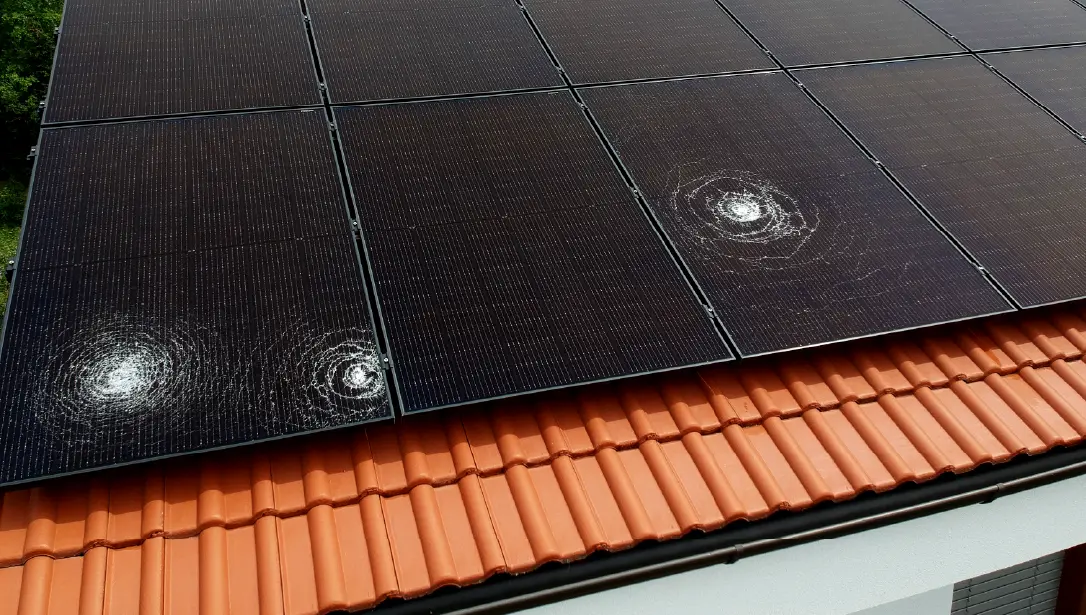
Large hail damage to solar panels on a roof.

The frequency and intensity of severe convective storm (SCS) events have increased significantly, leading to insured losses in billions of US dollars globally. Damage to aircraft, buildings, manufacturing plants, and renewable power generation, including solar panels, are among the most expensive drivers of SCS, mainly due to hail claims, Allianz Commercial analysis shows.

Unlike hurricanes, SCS events can strike with little or no warning, unleashing significant localised damage and triggering knock-on effects such as flash flooding. These unpredictable events have emerged as a major annual loss driver for the insurance industry, accounting for nearly half of all insured natural catastrophe losses in 2025, totalling over US$60bn.

The US is the number one SCS hotspot, accounting for more than 80% of the value of insured losses globally.

While tornadoes often dominate the headlines, the most significant SCS losses are caused by hailstorms, which are estimated to account for as much as 50%-80% of all losses. Again, the US is the global hotspot for these events, as well as the top loss location for hail claims, but Allianz Commercial analysis shows many other regions have also suffered substantial hailstorm damages.

Building resilience against this peril is therefore not a nice-to-have but needs to be on the agenda of every company with exposed assets in high-risk areas. But addressing this peril requires more than traditional scenario planning. New approaches leveraging AI are able to identify physical vulnerabilities in advance, enabling proactive risk mitigation to build resilience.

Thomas Lillelund, CEO of Allianz Commercial, comments: “Severe convective storms are still often viewed as a ‘secondary peril’, yet their cumulative losses now rival – and at times exceed – those of ‘primary perils’ like hurricanes. This reality highlights the urgent need for businesses to reassess their risk exposure and strengthen operational resilience through proactive, locally informed measures that limit both physical damage and disruption.”

SCS exposures have been intensified by population growth and development into hazard-prone areas. Rapid urbanisation, ageing infrastructure and assets, and building codes out of step with current exposures can all heighten the risk and value of losses. The limited spatial footprint and brief duration of SCS belie their capacity for concentrated destruction, particularly in densely populated regions, making them an increasingly important driver of economic and insured losses. After hail, damaging winds are the second major loss driver, mainly tornadoes and derechos.

Severe hailstorms primarily impact buildings – especially roofs – and all kinds of vehicles, which are major drivers of expensive insurance claims. The damage to physical assets from hailstones can be extensive.

Hail-related losses are not only growing in frequency but also shifting in character. What was once considered routine property damage now increasingly involves high-value assets, from aircraft fleets to solar installations, driving claim severity to levels that demand a fundamentally different response, Allianz Commercial analysis shows.

Inflation has driven up the costs of rebuilding and repairing property, an increase that is compounded by supply chain disruptions such as shortages in skilled labour and materials.

Risk mitigation a pressing priority for businesses

Mitigation measures for withstanding SCS with minimal damage will vary depending on the nature of a business’s activities and the local weather systems it is subject to. A data centre in Tornado Alley in the central US will need different resilience strategies than an automotive dealership in hail-prone northern Spain. Scenario analysis is essential for assessing risk exposure and building resilience to climate perils. Instead of reacting to losses after a major storm, organizations can now use AI-supported insights to identify weak points in roofs, facades, or critical equipment and prioritise upgrades that minimise future damage. This helps organizations understand how different climate futures could affect their assets, operations, and long-term performance. Scenario analysis can also reveal hidden vulnerabilities, identify possible tipping points, and show how risks may change over time. This forward-looking approach strengthens decision-making by allowing organizations to test adaptation options, focus investments, and design strategies that remain effective under multiple future conditions.

“Traditional catastrophe models have long struggled to capture property-specific risk factors, such as roof type and asset value, or the cumulative effects of hazards like hail on building envelopes. As AI becomes embedded in core risk processes, its most meaningful benefit for customers is its ability to support smarter, evidence-based resilience strategies that adapt to changing weather patterns, rather than relying on historical norms. A data and AI-driven risk management approach is the future and will be essential for organizations aiming to thrive in an increasingly volatile climate environment,” explains Michael Bruch, Global Head of Risk Advisory Consulting Services at Allianz Commercial.


Share. Facebook Twitter Pinterest LinkedIn Tumblr Email WhatsApp
Previous ArticleAI use helps organizational efficiency but there is a hidden threat: loss of customer trust
Next Article Stress Awareness Month: stress should be treated like any other workplace hazard

Related Posts

An exploding digital padlock illustrates the requirement for post-quantum cryptography.

Research breakthrough brings reliable quantum computers and Q-day closer to reality

September 10, 2026
A danger sign on a digital background.

New blob URL phishing technique evades detection by using legitimate Microsoft services

September 10, 2026
AI risks

Unmanaged AI workflows expose EMEA organizations to rising compliance and data risks

September 9, 2026
City skyline at sunset with bright light trails and a translucent blue smart-city grid overlay and GPS pins indicating locations.

AI world models: future possibilities for organizational resilience?

September 7, 2026
DRJ and BCI logos

DRJ and BCI publish guidance for governing, managing, and using AI in resilience

September 7, 2026
Decision making with over whelming information.

AI can find the vulnerability. Accountability still sits with your crisis leadership

September 7, 2026
Advertisement
Resilience First
This week's most read articles
Under pressure: An egg cracking under pressure applied by squeezing clamps form the sides.

Managing scenario testing for operational resilience

May 16, 2024
COSO logo

New COSO ERM guidance aims to help organizations with practical implementation

May 12, 2026
Close-up of a green-brown iris peering through a jagged tear in dark paper or wall material.

The blind spots in business continuity

September 2, 2026
Latest resources
AI in 2026

The 2026 inflection point: navigating the next era of AI

November 27, 2025
Load More

Subscribe to Updates

Get our Resilience Updates newsletter.

Most Popular Feature Articles
Three dark coloured light bulbs on a black background illustrate the concept of The Dark Triad in Crisis Management.

The Dark Triad in crisis management

Five stage crisis management framework

A five stage framework for a crisis management process

Blue interconnected gears and network nodes symbolizing automation and complex machinery.

Agent zero – the 2028 digital pandemic

Latest Reports
A futuristic red warning alert icon with glowing exclamation mark.

Cloud Security Alliance publishes Hugging Face Incident Initial Post-Mortem

A person hold a building door open for a person behind who is tailgating to get unauthorised access.

Security Culture: A Strategic Capability That Builds Resilience in a Volatile World

An identity icon with a map marker on it, indicating the concept of identity as a target for attackers. The icon is on a generic IT background predominantly in black and orange.

Identity-based approaches dominate initial access for ransomware attacks

A promo box for an article about resilience governance.
© 2026 Resilience Forward
  • About Resilience Forward
  • Newsletter
  • Newsfeed
  • Advertise
  • Call for Papers
  • Contact
  • Privacy Policy and Cookie Use
  • AI Use Policy

Type above and press Enter to search. Press Esc to cancel.

Manage Cookie Consent
To provide the best experiences, we use technologies like cookies to store and/or access device information. Consenting to these technologies will allow us to process data such as browsing behaviour or unique IDs on this site. Not consenting or withdrawing consent, may adversely affect certain features and functions.
Functional Always active
The technical storage or access is strictly necessary for the legitimate purpose of enabling the use of a specific service explicitly requested by the subscriber or user, or for the sole purpose of carrying out the transmission of a communication over an electronic communications network.
Preferences
The technical storage or access is necessary for the legitimate purpose of storing preferences that are not requested by the subscriber or user.
Statistics
The technical storage or access that is used exclusively for statistical purposes. The technical storage or access that is used exclusively for anonymous statistical purposes. Without a subpoena, voluntary compliance on the part of your Internet Service Provider, or additional records from a third party, information stored or retrieved for this purpose alone cannot usually be used to identify you.
Marketing
The technical storage or access is required to create user profiles to send advertising, or to track the user on a website or across several websites for similar marketing purposes.
  • Manage options
  • Manage services
  • Manage {vendor_count} vendors
  • Read more about these purposes
View preferences
  • {title}
  • {title}
  • {title}
Manage Cookie Consent
To provide the best experiences, we use technologies like cookies to store and/or access device information. Consenting to these technologies will allow us to process data such as browsing behaviour or unique IDs on this site. Not consenting or withdrawing consent, may adversely affect certain features and functions.
Functional Always active
The technical storage or access is strictly necessary for the legitimate purpose of enabling the use of a specific service explicitly requested by the subscriber or user, or for the sole purpose of carrying out the transmission of a communication over an electronic communications network.
Preferences
The technical storage or access is necessary for the legitimate purpose of storing preferences that are not requested by the subscriber or user.
Statistics
The technical storage or access that is used exclusively for statistical purposes. The technical storage or access that is used exclusively for anonymous statistical purposes. Without a subpoena, voluntary compliance on the part of your Internet Service Provider, or additional records from a third party, information stored or retrieved for this purpose alone cannot usually be used to identify you.
Marketing
The technical storage or access is required to create user profiles to send advertising, or to track the user on a website or across several websites for similar marketing purposes.
  • Manage options
  • Manage services
  • Manage {vendor_count} vendors
  • Read more about these purposes
View preferences
  • {title}
  • {title}
  • {title}
Ad Blocker Enabled!
Ad Blocker Enabled!
Our website is made possible by displaying online advertisements to our visitors. Please support us by disabling your Ad Blocker.

Sign In or Register

Welcome Back!

Login to your account below.

Lost password?


