Close Menu
  • Home
  • Managing resilience
    • AI resilience
    • Business continuity
    • Business resilience
    • Climate resilience
    • C-suite and the board
    • DORA – the EU Digital Operational Resilience Act
    • Operational resilience
    • Organizational resilience
    • Supply chain resilience
    • Technology
  • Risk
    • Enterprise risk management
    • Operational risk
    • Threatscape
  • Cyber resilience
    • Cyber resilience updates
    • DORA – the EU Digital Operational Resilience Act
    • Product updates
More items
  • All News
  • Research
  • Jobs in Resilience
  • Resilience Resources
  • About Resilience Forward
X (Twitter) LinkedIn
  • Home
  • Managing resilience
    • AI resilience
    • Business continuity
    • Business resilience
    • Climate resilience
    • C-suite and the board
    • DORA – the EU Digital Operational Resilience Act
    • Operational resilience
    • Organizational resilience
    • Supply chain resilience
    • Technology
  • Risk
    • Enterprise risk management
    • Operational risk
    • Threatscape
  • Cyber resilience
    • Cyber resilience updates
    • DORA – the EU Digital Operational Resilience Act
    • Product updates
Login
LinkedIn Bluesky
Resilience Forward
Subscribe Now
  • All News
  • Research
  • Jobs in Resilience
  • Resilience Resources
  • About Resilience Forward
Resilience Forward
You are at:Home»Risk»Threatscape»Severe but plausible scenarios: analysis of a future major attack on the UK energy infrastructure (Page 6)
Threatscape

Severe but plausible scenarios: analysis of a future major attack on the UK energy infrastructure

September 3, 20263 Mins Read
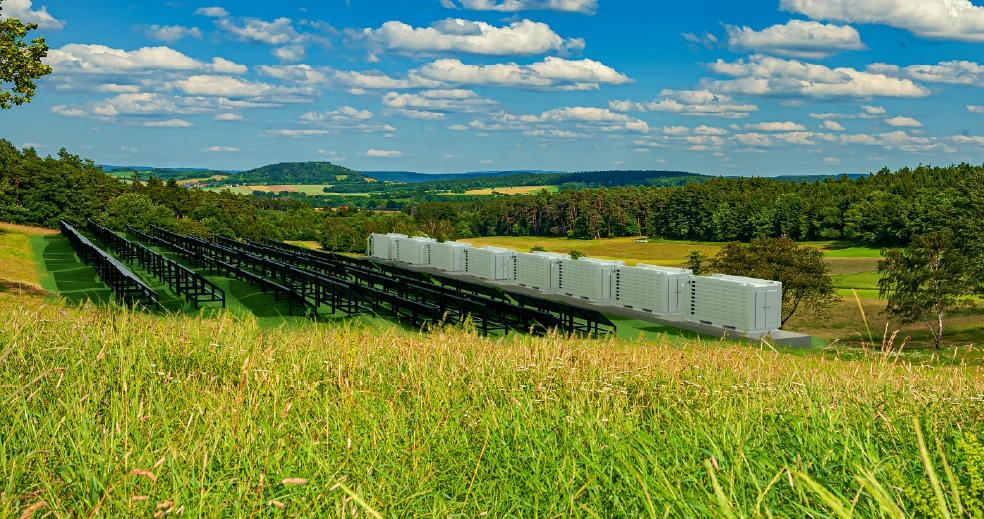
A solar farm with battery storage facility.

Centrii has published ‘GRIDLOCK’, a risk assessment analysis of cyber-physical exposure in UK battery energy storage systems (BESS). These use batteries to store wind or solar generated electricity at times when supply is higher than demand. They can then later release it into power grids when it is needed.

Using a Monte Carlo risk analysis methodology of 10,000 simulations across three industry security postures – baseline, moderate, and aggressive – the ‘GRIDLOCK: What a Coordinated Battery Attack Would Cost the Grid’ report quantifies the probability and financial cost of a coordinated attack on BESS between now and 2031.

According to the findings, under industry-average security practices, there is a 92% probability of a major attack on battery storage infrastructure within the next five years. This falls as security investment and enhancements increase. Under voluntary improvement adopted gradually and unevenly across the sector, it falls to 78%, while adopting mandatory IEC 62443 certification and regular attack-readiness drills sees the probability fall to 61%.

The earliest likely attack window also changes as a result, from 2027-28 under the baseline posture to 2029-31 under the most rigorous one. Based on these figures, security investment not only reduces risk, but it also buys time.

In the UK, the effects of an attack are more concentrated than in the US. The modelling finds that compromising 29% of national BESS capacity (around 400 units) could be sufficient to trigger a nationwide outage affecting 67 million people, effectively the entire population. A single major attack is estimated to cost between £2bn and £10bn in financial damage.

Bringing UK battery storage infrastructure up to IEC 62443 Security Level 2 – the standard the modelling shows meaningfully reduces attack probability – is estimated to cost between £400m and £1bn across the national fleet. That is a return on proactive security investment of roughly 5x to 25x.

Rafael Narezzi, Co-Founder and CEO of Centrii, explains the importance: “A coordinated attack does not need to stop generation to cause a blackout. It only needs to desynchronise the balancing layer, forcing batteries to charge or discharge together, or delaying how they respond to grid signals. Neither action damages a battery. The effect is closer to a distributed denial-of-service attack than a conventional outage – instead of overwhelming a website with traffic, it overwhelms the grid’s ability to stay in balance, using energy itself as the disruptive force. The modelled result is a cascading blackout that unfolds in under two minutes.”

Risks to grid-balancing infrastructure

According to RenewableUK, the UK government has estimated that between 23GW and 27GW of battery storage will be required by 2030, a significant increase from approximately 4.5GW in 2024.

While the balancing function in modern battery fleets, often managed remotely through cloud-based platforms, makes them efficient to run at scale, it also exposes them to attacks, according to the Centrii report.

Recent high-profile events in Europe demonstrate how disruptions to grid-balancing infrastructure can escalate quickly. Both illustrate the underlying risks examined by ‘GRIDLOCK’ that relatively concentrated disruptions to generation or balancing infrastructure can have consequences across a much larger grid:

  • In December 2025, state-sponsored actors were reported to have attempted to destabilise regional grid infrastructure in Poland by rapidly cycling wind turbine output rather than damaging equipment.
  • In April 2025, the Iberian grid collapsed after 2.5GW of generation was lost in under 20 seconds, leaving parts of Spain and Portugal without power for roughly ten hours and some areas for longer. Authorities attributed the Iberian outage to technical causes, not a cyber attack.
More details
UK
Share. Facebook Twitter Pinterest LinkedIn Tumblr Email WhatsApp
Previous ArticleEnterprises are struggling to keep mission-critical applications resilient: despite widespread HA/DR investments
Next Article FCA: Frontier AI is testing firms’ cyber resilience, governance, and vulnerability management

Related Posts

An exploding digital padlock illustrates the requirement for post-quantum cryptography.

Research breakthrough brings reliable quantum computers and Q-day closer to reality

September 10, 2026
A danger sign on a digital background.

New blob URL phishing technique evades detection by using legitimate Microsoft services

September 10, 2026
AI risks

Unmanaged AI workflows expose EMEA organizations to rising compliance and data risks

September 9, 2026
City skyline at sunset with bright light trails and a translucent blue smart-city grid overlay and GPS pins indicating locations.

AI world models: future possibilities for organizational resilience?

September 7, 2026
DRJ and BCI logos

DRJ and BCI publish guidance for governing, managing, and using AI in resilience

September 7, 2026
Decision making with over whelming information.

AI can find the vulnerability. Accountability still sits with your crisis leadership

September 7, 2026
Advertisement
Resilience First
This week's most read articles
Under pressure: An egg cracking under pressure applied by squeezing clamps form the sides.

Managing scenario testing for operational resilience

May 16, 2024
COSO logo

New COSO ERM guidance aims to help organizations with practical implementation

May 12, 2026
Close-up of a green-brown iris peering through a jagged tear in dark paper or wall material.

The blind spots in business continuity

September 2, 2026
Latest resources
Graphic showing a range of risks from green to red grades.

2026 update to the UK National Risk Register published

July 15, 2026
Load More

Subscribe to Updates

Get our Resilience Updates newsletter.

Most Popular Feature Articles
Three dark coloured light bulbs on a black background illustrate the concept of The Dark Triad in Crisis Management.

The Dark Triad in crisis management

Five stage crisis management framework

A five stage framework for a crisis management process

Blue interconnected gears and network nodes symbolizing automation and complex machinery.

Agent zero – the 2028 digital pandemic

Latest Reports
A futuristic red warning alert icon with glowing exclamation mark.

Cloud Security Alliance publishes Hugging Face Incident Initial Post-Mortem

A person hold a building door open for a person behind who is tailgating to get unauthorised access.

Security Culture: A Strategic Capability That Builds Resilience in a Volatile World

An identity icon with a map marker on it, indicating the concept of identity as a target for attackers. The icon is on a generic IT background predominantly in black and orange.

Identity-based approaches dominate initial access for ransomware attacks

A promo box for an article about resilience governance.
© 2026 Resilience Forward
  • About Resilience Forward
  • Newsletter
  • Newsfeed
  • Advertise
  • Call for Papers
  • Contact
  • Privacy Policy and Cookie Use
  • AI Use Policy

Type above and press Enter to search. Press Esc to cancel.

Manage Cookie Consent
To provide the best experiences, we use technologies like cookies to store and/or access device information. Consenting to these technologies will allow us to process data such as browsing behaviour or unique IDs on this site. Not consenting or withdrawing consent, may adversely affect certain features and functions.
Functional Always active
The technical storage or access is strictly necessary for the legitimate purpose of enabling the use of a specific service explicitly requested by the subscriber or user, or for the sole purpose of carrying out the transmission of a communication over an electronic communications network.
Preferences
The technical storage or access is necessary for the legitimate purpose of storing preferences that are not requested by the subscriber or user.
Statistics
The technical storage or access that is used exclusively for statistical purposes. The technical storage or access that is used exclusively for anonymous statistical purposes. Without a subpoena, voluntary compliance on the part of your Internet Service Provider, or additional records from a third party, information stored or retrieved for this purpose alone cannot usually be used to identify you.
Marketing
The technical storage or access is required to create user profiles to send advertising, or to track the user on a website or across several websites for similar marketing purposes.
  • Manage options
  • Manage services
  • Manage {vendor_count} vendors
  • Read more about these purposes
View preferences
  • {title}
  • {title}
  • {title}
Manage Cookie Consent
To provide the best experiences, we use technologies like cookies to store and/or access device information. Consenting to these technologies will allow us to process data such as browsing behaviour or unique IDs on this site. Not consenting or withdrawing consent, may adversely affect certain features and functions.
Functional Always active
The technical storage or access is strictly necessary for the legitimate purpose of enabling the use of a specific service explicitly requested by the subscriber or user, or for the sole purpose of carrying out the transmission of a communication over an electronic communications network.
Preferences
The technical storage or access is necessary for the legitimate purpose of storing preferences that are not requested by the subscriber or user.
Statistics
The technical storage or access that is used exclusively for statistical purposes. The technical storage or access that is used exclusively for anonymous statistical purposes. Without a subpoena, voluntary compliance on the part of your Internet Service Provider, or additional records from a third party, information stored or retrieved for this purpose alone cannot usually be used to identify you.
Marketing
The technical storage or access is required to create user profiles to send advertising, or to track the user on a website or across several websites for similar marketing purposes.
  • Manage options
  • Manage services
  • Manage {vendor_count} vendors
  • Read more about these purposes
View preferences
  • {title}
  • {title}
  • {title}
Ad Blocker Enabled!
Ad Blocker Enabled!
Our website is made possible by displaying online advertisements to our visitors. Please support us by disabling your Ad Blocker.

Sign In or Register

Welcome Back!

Login to your account below.

Lost password?