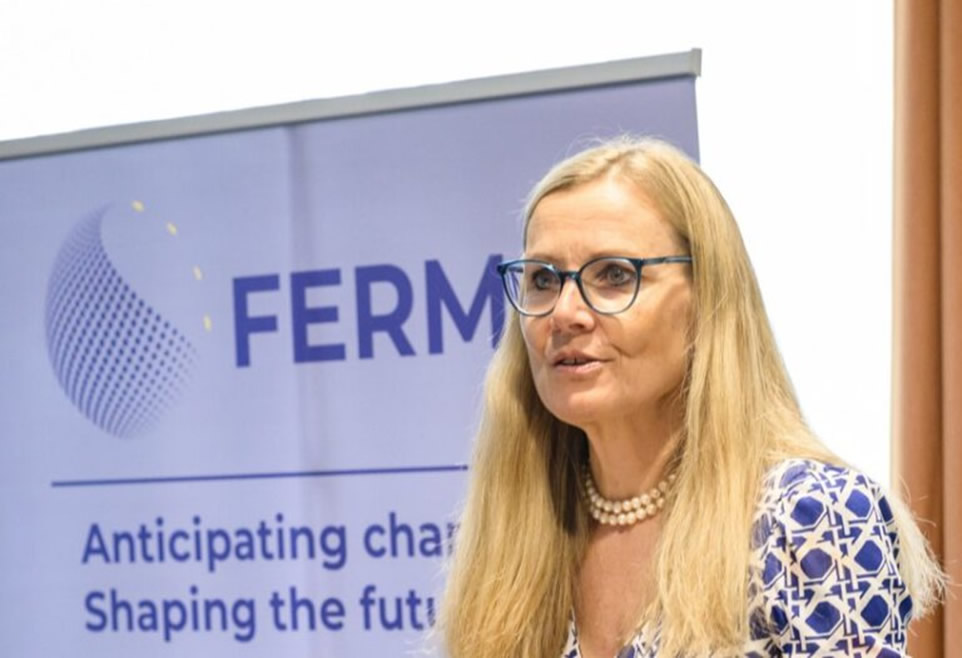
In an increasingly interconnected and rapidly evolving risk landscape, risk managers must not only confront the challenges it presents but also uncover the opportunities it offers by developing the skill of strategic foresight. This is according to Charlotte Hedemark, president of FERMA, speaking at the Federation’s recent general assembly in Brussels.
“At a time of constant change and rising complexity, foresight is a vital complement to traditional risk management to navigate uncertainty and emerging threats,” Hedemark told attendees. “At FERMA, one of our priorities is to inspire and equip risk managers to become future-focused enablers within their organizations – champions of opportunity in an ever-changing risk landscape.”
In May, FERMA launched the New Exposure Trends (NeXT) report, which identified four global, interconnected, and potentially systemic risks: geopolitical shifts, technological acceleration, climate change, and human capital. Hedemark highlighted how the report made clear “the need to find ways to anticipate how these risks might evolve and affect our organizations and our society in the future.”
“It is clear that strategic foresight is essential for building organizational resilience and long-term value, as our work has shown,” Hedemark continued. “Risk managers must take the lead in cultivating a forward-looking culture, expanding risk horizons, and challenging cognitive biases that limit ambition and restrict opportunity.”
Highlighting the need for more effective integration of capabilities such as scenario planning, trend analysis, and horizon scanning into decision-making, she urged companies to “Adopt a more holistic, future-ready approach to risk.”