Carbon dioxide is accumulating in the atmosphere faster than ever — accelerating on a steep rise to levels far above any experienced during human existence, scientists from NOAA and the Scripps Institution of Oceanography at the University of California San Diego have announced.
Atmospheric carbon dioxide measured at NOAA’s Mauna Loa Atmospheric Baseline Observatory peaked in May 2024 at a monthly average of 426.9 parts per million, establishing another high mark in the 66-year record of observations on the Hawaiian volcano, according to scientists from NOAA and Scripps Institution of Oceanography at the University of California San Diego.
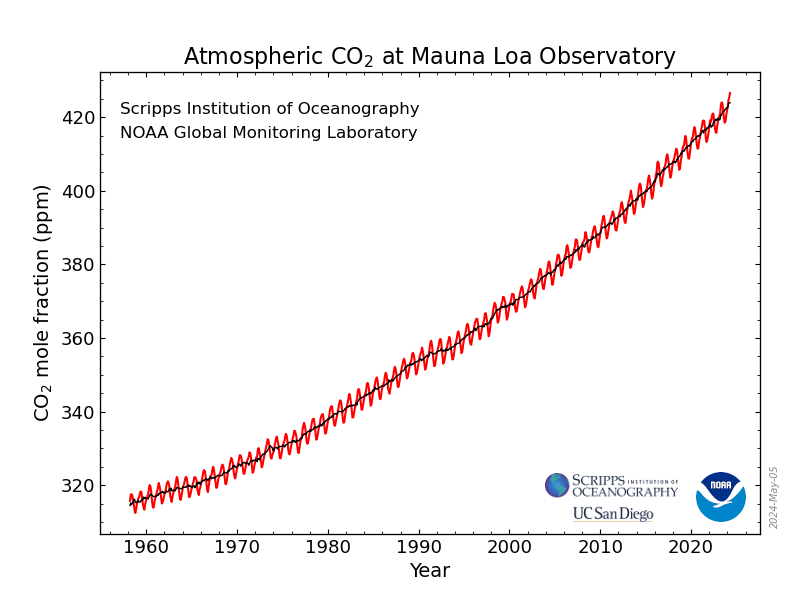
Levels of carbon dioxide measured at NOAA’s Mauna Loa Atmospheric Baseline Observatory by NOAA’s Global Monitoring Laboratory surged to a seasonal peak of just under 427 parts per million (426.90 ppm) in May, when carbon dioxide reaches its highest level in the Northern Hemisphere. That’s an increase of 2.9 ppm over May 2023 and the 5th-largest annual growth in NOAA’s 50-year record. When combined with 2023’s increase of 3.0 ppm, the period from 2022 to 2024 has seen the largest two-year jump in the May peak in the NOAA record.
From January through April 2024, NOAA and Scripps scientists said carbon dioxide concentrations increased more rapidly than they have in the first four months of any other year.
Over the past year, we’ve experienced the hottest year on record, the hottest ocean temperatures on record and a seemingly endless string of heat waves, droughts, floods, wildfires, and storms. Now we are finding that atmospheric carbon dioxide levels are increasing faster than ever. We must recognize that these are clear signals of the damage carbon dioxide pollution is doing to the climate system and take rapid action to cut fossil fuel use as quickly as we can.
NOAA Administrator Rick Spinrad, Ph.D