Close Menu
  • Home
  • Managing resilience
    • AI resilience
    • Business continuity
    • Business resilience
    • Climate resilience
    • C-suite and the board
    • DORA – the EU Digital Operational Resilience Act
    • Operational resilience
    • Organizational resilience
    • Supply chain resilience
    • Technology
  • Risk
    • Enterprise risk management
    • Operational risk
    • Threatscape
  • Cyber resilience
    • Cyber resilience updates
    • DORA – the EU Digital Operational Resilience Act
    • Product updates
More items
  • All News
  • Research
  • Jobs in Resilience
  • Resilience Resources
  • About Resilience Forward
X (Twitter) LinkedIn
  • Home
  • Managing resilience
    • AI resilience
    • Business continuity
    • Business resilience
    • Climate resilience
    • C-suite and the board
    • DORA – the EU Digital Operational Resilience Act
    • Operational resilience
    • Organizational resilience
    • Supply chain resilience
    • Technology
  • Risk
    • Enterprise risk management
    • Operational risk
    • Threatscape
  • Cyber resilience
    • Cyber resilience updates
    • DORA – the EU Digital Operational Resilience Act
    • Product updates
Login
LinkedIn Bluesky
Resilience Forward
Subscribe Now
  • All News
  • Research
  • Jobs in Resilience
  • Resilience Resources
  • About Resilience Forward
Resilience Forward
You are at:Home»2025 Predictions»Key trends in high availability: predictions for a resilient future in IT infrastructure
2025 Predictions

Key trends in high availability: predictions for a resilient future in IT infrastructure

December 4, 20244 Mins Read
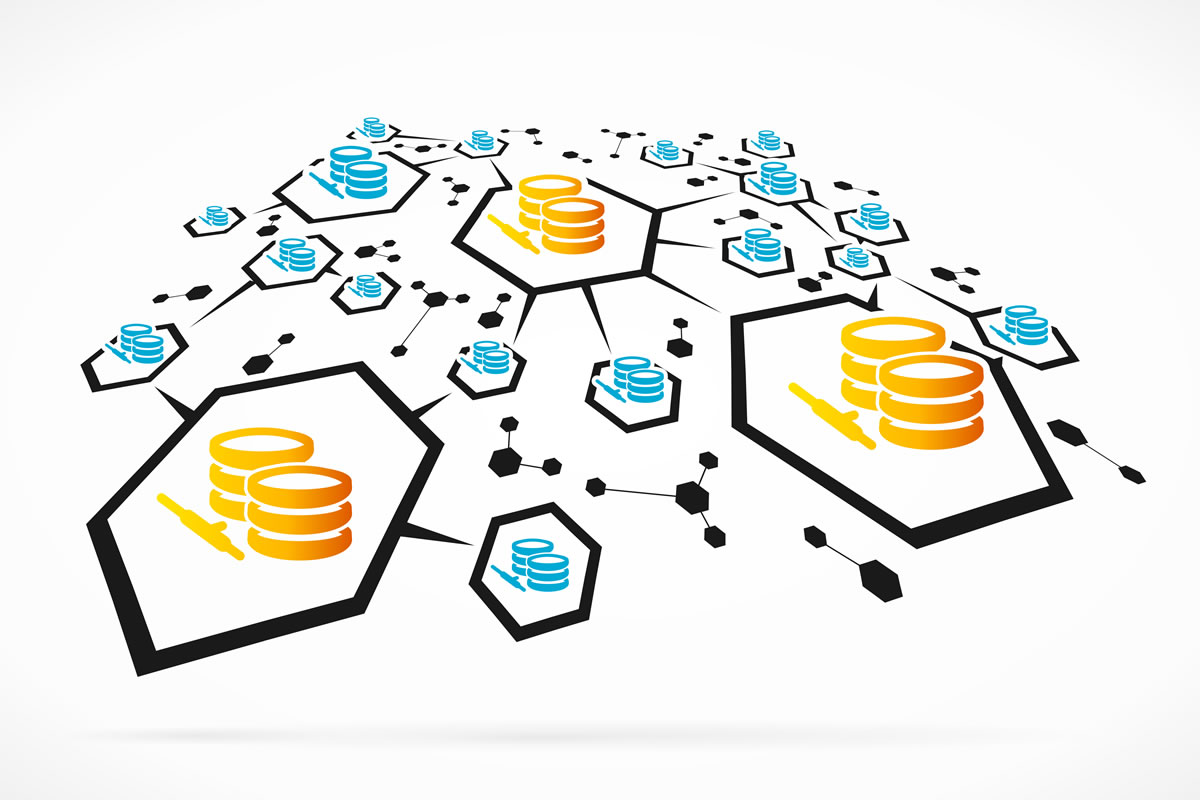
High availability concept

2025 is expected to usher in pivotal shifts in the IT landscape as enterprises prioritize resilience and adaptability in a rapidly evolving technological environment. As demands for security, performance, and operational efficiency grow, trends like real-time failover for AI-driven analytics, greater adoption of hybrid and multi-cloud architectures, and simplified, IT generalist-friendly solutions will redefine how organizations ensure high availability. With advancements in hyperconverged infrastructure, cross-region failover strategies, and automated clustering integrated with application performance monitoring (APM) tools, businesses are set to achieve unprecedented levels of uptime and security.

Here are the key trends Cassius Rhue expects to shape the future of high availability and disaster recovery:

Real-time failover for AI-powered security analytics

As AI-driven security analytics tools become standard for detecting and responding to threats, organizations will prioritize high availability to ensure these applications operate without downtime. Failover clustering will play a crucial role in maintaining continuous, real-time threat detection and response, preventing gaps in security coverage that could leave the enterprise vulnerable. By leveraging failover clustering, enterprises will mitigate risks and enable uninterrupted operation of their critical security monitoring and analytics tools.

Greater adoption of hybrid cloud failover clustering

Enterprises will increasingly implement hybrid cloud architectures, combining on-premises data centers with public cloud platforms for failover clustering. This setup will ensure high availability and disaster recovery while offering flexibility and cost-effectiveness. Organizations will prioritize failover solutions that seamlessly bridge on-prem and cloud environments, allowing IT teams to leverage the cloud’s resilience without abandoning existing infrastructure.

Focus on simplified, IT generalist-friendly solutions

Many enterprises will invest in failover clustering solutions that are easier to manage, targeting the growing need for solutions that can be operated by IT generalists, not just clustering experts. With automation, simplified interfaces, and streamlined deployment, these clustering solutions will allow organizations to maintain high availability without the complexity typically associated with failover clustering – appealing particularly to small and medium-sized businesses looking to achieve enterprise-grade resilience.

Hyperconverged infrastructure takes center stage in enterprise IT

Enterprises will increasingly migrate critical applications to hyperconverged infrastructures (HCI) to simplify management, cut costs, and enable dynamic scaling. HCI consolidates storage, compute, and networking, reducing the complexity of traditional systems. As IT leaders prioritize agility and resilience, HCI’s automation and reliability will present a strong alternative to traditional setups. This trend also aligns with growing demands for hybrid and multi-cloud flexibility, as HCI integrates seamlessly with public cloud providers.

Increased reliance on cross-region, multi-cloud failover clustering

To achieve stronger resilience against regional outages, enterprises will adopt cross-region and multi-cloud failover clustering strategies. These setups will allow critical applications to failover seamlessly across different cloud regions or cloud providers, ensuring continuity even in cases of large-scale disruptions. This trend will drive demand for clustering solutions capable of handling complex, geographically distributed infrastructures and automating failover processes across subnets and cloud regions with minimal manual intervention.

High availability for zero trust security architectures

With enterprises continuing to adopt zero trust architectures, there will be a growing emphasis on ensuring that security applications supporting zero trust (e.g., identity and access management, endpoint protection, and authentication systems) remain highly available. Failover clustering will become essential for these applications to operate without interruption, allowing enterprises to enforce continuous security measures and authentication processes even during maintenance or unexpected system issues.

Always-on monitoring: the future of automated high availability clustering for APM

High availability clustering with application performance monitoring (APM) tools will become more streamlined and automated, making it easier to maintain continuous monitoring without disruptions. High availability clustering solutions will feature improved integration with APM platforms, offering seamless failover, predictive analytics for proactive issue resolution, and reduced setup complexity. Users can expect more self-healing capabilities, where clusters can detect and address performance issues automatically, minimizing manual intervention and ensuring that critical monitoring remains active around the clock.

The author

Cassius Rhue is VP, Customer Experience, SIOS Technology

Cassius Rhue leads the Customer Experience team at SIOS Technology responsible for customer success spanning pre-sales, post-sales and professional services engagements. With over 19 years of experience at SIOS and a keen focus on the customer, Cassius’ significant skills, and deep knowledge in software engineering, development, design, and deployment specifically in the HA/DR space are instrumental in addressing customer issues and driving their success. Cassius has a Bachelor of Science (BS) degree in Computer Engineering from the University of South Carolina – Columbia, SC.


Africa Asia Asia Pacific Australasia Europe Middle East North America UK
Share. Facebook Twitter Pinterest LinkedIn Tumblr Email WhatsApp
Previous ArticlePandemic planning: UK Government makes H5 influenza vaccine investment
Next Article New Zealand Government changes rules for aviation fuel suppliers to increase supply chain resilience

Related Posts

A solar farm with associated wind turbines.

The resilience challenges of the renewable energy transition

October 2, 2026
Sovereign cloud concept - a digital map of the world is overlaid with multiple cloud icons of different sizes.

Sovereignty and resilience: considerations for organizational leaders

October 2, 2026
A medical worker in a hazmat suit responds to a pandemic victim.

UN pandemic meeting renews preparedness calls but fails to agree declaration

October 1, 2026
Cloned website images overlaid with phishing icons.

Organizational impersonation ranks as top online IP concern: with significant business impacts

October 1, 2026
AI resilience concept.

Survey highlights measures that organizations are considering for improved AI resilience

October 1, 2026
Fragility concept - a human head made up of jigsaw pieces starts to dissolve.

AI efficiency gains can increase organizational fragility

October 1, 2026
Advertisement
Resilience First
This week's most read articles
Open lorry car trunk full of moving cardboard boxes and furniture outdoors at city street.

HP Wolf study finds growing concern about attacks on hardware supply chains

August 6, 2024
A solar farm with associated wind turbines.

The resilience challenges of the renewable energy transition

October 2, 2026
Five stage crisis management framework

A five stage framework for a crisis management process

April 2, 2025
Latest resources
DRJ and BCI logos

DRJ and BCI publish guidance for governing, managing, and using AI in resilience

September 7, 2026
Load More

Subscribe to Updates

Get our Resilience Updates newsletter.

Most Popular Feature Articles
Three dark coloured light bulbs on a black background illustrate the concept of The Dark Triad in Crisis Management.

The Dark Triad in crisis management

Five stage crisis management framework

A five stage framework for a crisis management process

Blue interconnected gears and network nodes symbolizing automation and complex machinery.

Agent zero – the 2028 digital pandemic

Latest Reports
Global risks concept

UN report warns that the global risk landscape is being redrawn

Three blank wooden signs against a blue sky.

System restoration is not business continuity: research finds that ‘most cyber recovery plans are built for the wrong outcome’

BCI Continuity and Resilience Report 2026 cover.

BCI report sees growing structural divide between business continuity and resilience

A promo box for an article about resilience governance.
© 2026 Resilience Forward
  • About Resilience Forward
  • Newsletter
  • Newsfeed
  • Advertise
  • Call for Papers
  • Contact
  • Privacy Policy and Cookie Use
  • AI Use Policy

Type above and press Enter to search. Press Esc to cancel.

Manage Cookie Consent
To provide the best experiences, we use technologies like cookies to store and/or access device information. Consenting to these technologies will allow us to process data such as browsing behaviour or unique IDs on this site. Not consenting or withdrawing consent, may adversely affect certain features and functions.
Functional Always active
The technical storage or access is strictly necessary for the legitimate purpose of enabling the use of a specific service explicitly requested by the subscriber or user, or for the sole purpose of carrying out the transmission of a communication over an electronic communications network.
Preferences
The technical storage or access is necessary for the legitimate purpose of storing preferences that are not requested by the subscriber or user.
Statistics
The technical storage or access that is used exclusively for statistical purposes. The technical storage or access that is used exclusively for anonymous statistical purposes. Without a subpoena, voluntary compliance on the part of your Internet Service Provider, or additional records from a third party, information stored or retrieved for this purpose alone cannot usually be used to identify you.
Marketing
The technical storage or access is required to create user profiles to send advertising, or to track the user on a website or across several websites for similar marketing purposes.
  • Manage options
  • Manage services
  • Manage {vendor_count} vendors
  • Read more about these purposes
View preferences
  • {title}
  • {title}
  • {title}
Ad Blocker Enabled!
Ad Blocker Enabled!
Our website is made possible by displaying online advertisements to our visitors. Please support us by disabling your Ad Blocker.

Sign In or Register

Welcome Back!

Login to your account below.

Lost password?