Close Menu
  • Home
  • Managing resilience
    • AI resilience
    • Business continuity
    • Business resilience
    • Climate resilience
    • C-suite and the board
    • DORA – the EU Digital Operational Resilience Act
    • Operational resilience
    • Organizational resilience
    • Supply chain resilience
    • Technology
  • Risk
    • Enterprise risk management
    • Operational risk
    • Threatscape
  • Cyber resilience
    • Cyber resilience updates
    • DORA – the EU Digital Operational Resilience Act
    • Product updates
More items
  • All News
  • Research
  • Jobs in Resilience
  • Resilience Resources
  • About Resilience Forward
X (Twitter) LinkedIn
  • Home
  • Managing resilience
    • AI resilience
    • Business continuity
    • Business resilience
    • Climate resilience
    • C-suite and the board
    • DORA – the EU Digital Operational Resilience Act
    • Operational resilience
    • Organizational resilience
    • Supply chain resilience
    • Technology
  • Risk
    • Enterprise risk management
    • Operational risk
    • Threatscape
  • Cyber resilience
    • Cyber resilience updates
    • DORA – the EU Digital Operational Resilience Act
    • Product updates
Login
LinkedIn Bluesky
Resilience Forward
Subscribe Now
  • All News
  • Research
  • Jobs in Resilience
  • Resilience Resources
  • About Resilience Forward
Resilience Forward
You are at:Home»Cyber resilience»How campaign-centric detection can address alert fatigue (Page 73)
Cyber resilience

How campaign-centric detection can address alert fatigue

October 9, 20254 Mins Read
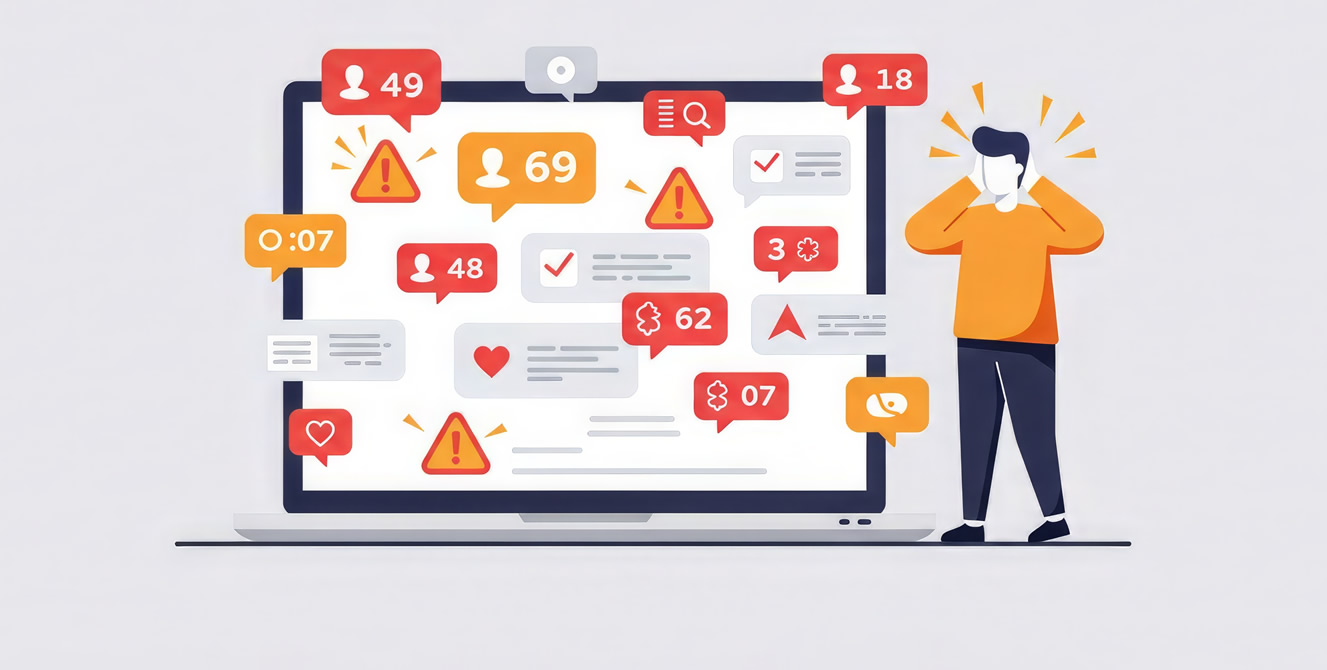
Illustration showing a person overwhelmed by too many digital notifications and alerts on screen.

By Ross Brewer

CISOs and their teams are constantly monitoring their tech estates to detect potential cyberattacks but, even so, attacks can be missed or detection delayed. One of the major causes of organizations’ lack of detection remains alert fatigue. It is this alert overload that contributes to delayed detection in more than half of all breaches.

While phishing emails, authentication prompts, and constant vigilance all add pressure on teams, there is a reason security fatigue remains such a significant challenge in cybersecurity defence. It is a deeper, more destructive phenomenon – one that overwhelms analysts and can cause critical delays in response, creating blind spots that adversaries are quick to exploit.

The state of alert fatigue

Security teams today are inundated with noisy alerts and fragmented monitoring tools. Analysts’ time is drained by false positives, and manual triage consumes valuable hours. Once burnout sets in, it becomes easy for genuine threats to go unnoticed amid the overwhelming volume of alerts.

As attackers grow more subtle in their methods, cybersecurity approaches are evolving too. Attackers now stretch campaigns over weeks and blend in so effectively that they do not trigger single, high-fidelity alarms. Since this trail of signals only becomes meaningful when linked together, many threats still evade detection.

However, this is not just a technology problem. It is the by-product of outdated systems that are unable to adapt quickly enough to deal with evolving cyber threats, forcing 24/7 surveillance. Research from Google Cloud found that threat notifications are not always helpful; instead, they overwhelm security teams. Nearly two-thirds (61%) of security practitioners believe there are too many threat-intelligence data feeds.

On top of this, false positives and manual triage further deplete valuable analyst time. Traditional security information and event management (SIEM) systems simply cannot keep up, as they were not designed for behaviour-based detection. Many count events without context, generating a tremendous volume of low-value alerts – far from the insights that analysts need to respond effectively.

As a result of dissatisfaction with disconnected alerts, buyer expectations are escalating. There is now a growing demand for tools that enable campaign-based detection, connecting isolated events to deliver full attack visibility.

How campaign-centric detection can help

Technology has advanced beyond single alerts and basic event correlation. Campaign-centric detection enables teams to link related activities into broader threat campaigns. This context-based approach cuts through noise and focuses analyst attention on insights derived from legitimate adversary behaviour.

By connecting independent events to build a complete attack narrative, campaign-centric detection reduces the number of alerts while making each one more meaningful. As a result, analysts spend less time chasing false positives and more time stopping real threats.

A SANS SOC survey revealed that alert triage consumes more time than any other task in the detection and response cycle, with 58% of teams identifying it as their biggest drain – above investigation or response. It is clear that analysts do not need more alerts; they need better signal quality.

Campaign-centric detection creates precise triggers based on individual or aggregated event conditions, ensuring that alerts are both targeted and relevant. By fine-tuning detection rules, filtering noise, and leveraging contextual data from real threats, teams can eliminate false positives and enhance visibility into genuinely suspicious activity – allowing security teams to respond with confidence and efficiency.

As cybersecurity becomes a boardroom priority, business leaders also benefit. Viewing threats as connected campaigns rather than isolated events provides clearer insights into what happened and how to respond. This makes security risks easier to explain and defend at the highest level.

Future-proof infrastructure monitoring

Campaign-centric detection can have an immediate impact on cybersecurity strategy. It delivers stronger signals with less pressure on the team and provides threat visibility aligned with business context. Ultimately, with the right information at the right time, teams can make faster, more confident decisions.

Elevated threats demand smarter counterstrategies. To move beyond reacting to individual alerts and empower teams to understand adversary behaviour, campaign-based detection is the way forward. It eliminates critical alert fatigue, boosts analyst productivity, and helps thwart threats as they emerge.

The author

Ross Brewer is Vice President and Managing Director, EMEA, at Graylog

Africa Asia Asia Pacific Australasia Europe Middle East North America UK
Share. Facebook Twitter Pinterest LinkedIn Tumblr Email WhatsApp
Previous ArticleWhy insurers and brokers need smarter resourcing resilience strategies
Next Article The risks of GenAI risk assessment: beyond the obvious

Related Posts

A group of rabbits happily graze while a wolf watches, hidden in the bushes behind them.

Confidence in resilience is outpacing reality, according to new report

November 13, 2026
An upward trending arrow.

Organizations are being forced to rethink resilience strategies, finds State of IT Infrastructure Resilience study

November 13, 2026
Error page: 'This site can't be reached' message from a browser, indicating connection closed and suggesting checks (reload button visible).

Microsoft outage demonstrates the realities of concentration risks

November 13, 2026
The numbers 2027 with the 0 replaced with an AI symbol.

From hype to control: AI security, risk management, and governance in 2027

November 13, 2026
Geopolitical risks

Geopolitical conflict is increasingly reshaping how organizations manage people, operations, and risk

November 9, 2026
Abstract network of interconnected nodes and lines in blue.

Everbridge publishes its 2027 Global Risk & Resilience Outlook

November 9, 2026
Advertisement
Resilience First
This week's most read articles
AI agent in action concept.

Lack of clear activity baselines makes it harder to manage AI agent resilience and security

November 9, 2026
Error page: 'This site can't be reached' message from a browser, indicating connection closed and suggesting checks (reload button visible).

Microsoft outage demonstrates the realities of concentration risks

November 13, 2026
Two different jigsaw pieces.

KPMG Risk & Resilience Survey finds that half of organizations have yet to integrate risk and resilience management

March 12, 2025
Latest resources
ISO logo

ISO releases new guidelines standard on developing organizational resilience policies and strategies

October 22, 2024
Load More

Subscribe to Updates

Get our Resilience Updates newsletter.

Most Popular Feature Articles
Five stage crisis management framework

A five stage framework for a crisis management process

Three dark coloured light bulbs on a black background illustrate the concept of The Dark Triad in Crisis Management.

The Dark Triad in crisis management

Blue interconnected gears and network nodes symbolizing automation and complex machinery.

Agent zero – the 2028 digital pandemic

Latest Reports
An AI agent icon lying on its side with eyes shut showing the concept of a deactivated agent.

New report reveals major operational resilience gaps in agentic AI adoption

Two hands form a rectangular frame around the sun in a bright sky over distant mountains.

BCI Future of Resilience Report points to a more strategic future for resilience

Global risks concept

UN report warns that the global risk landscape is being redrawn

A promo box for an article about resilience governance.
© 2026 Resilience Forward
  • About Resilience Forward
  • Newsletter
  • Newsfeed
  • Advertise
  • Call for Papers
  • Contact
  • Privacy Policy and Cookie Use
  • AI Use Policy

Type above and press Enter to search. Press Esc to cancel.

Manage Cookie Consent
To provide the best experiences, we use technologies like cookies to store and/or access device information. Consenting to these technologies will allow us to process data such as browsing behaviour or unique IDs on this site. Not consenting or withdrawing consent, may adversely affect certain features and functions.
Functional Always active
The technical storage or access is strictly necessary for the legitimate purpose of enabling the use of a specific service explicitly requested by the subscriber or user, or for the sole purpose of carrying out the transmission of a communication over an electronic communications network.
Preferences
The technical storage or access is necessary for the legitimate purpose of storing preferences that are not requested by the subscriber or user.
Statistics
The technical storage or access that is used exclusively for statistical purposes. The technical storage or access that is used exclusively for anonymous statistical purposes. Without a subpoena, voluntary compliance on the part of your Internet Service Provider, or additional records from a third party, information stored or retrieved for this purpose alone cannot usually be used to identify you.
Marketing
The technical storage or access is required to create user profiles to send advertising, or to track the user on a website or across several websites for similar marketing purposes.
  • Manage options
  • Manage services
  • Manage {vendor_count} vendors
  • Read more about these purposes
View preferences
  • {title}
  • {title}
  • {title}
Manage Cookie Consent
To provide the best experiences, we use technologies like cookies to store and/or access device information. Consenting to these technologies will allow us to process data such as browsing behaviour or unique IDs on this site. Not consenting or withdrawing consent, may adversely affect certain features and functions.
Functional Always active
The technical storage or access is strictly necessary for the legitimate purpose of enabling the use of a specific service explicitly requested by the subscriber or user, or for the sole purpose of carrying out the transmission of a communication over an electronic communications network.
Preferences
The technical storage or access is necessary for the legitimate purpose of storing preferences that are not requested by the subscriber or user.
Statistics
The technical storage or access that is used exclusively for statistical purposes. The technical storage or access that is used exclusively for anonymous statistical purposes. Without a subpoena, voluntary compliance on the part of your Internet Service Provider, or additional records from a third party, information stored or retrieved for this purpose alone cannot usually be used to identify you.
Marketing
The technical storage or access is required to create user profiles to send advertising, or to track the user on a website or across several websites for similar marketing purposes.
  • Manage options
  • Manage services
  • Manage {vendor_count} vendors
  • Read more about these purposes
View preferences
  • {title}
  • {title}
  • {title}
Ad Blocker Enabled!
Ad Blocker Enabled!
Our website is made possible by displaying online advertisements to our visitors. Please support us by disabling your Ad Blocker.

Sign In or Register

Welcome Back!

Login to your account below.

Lost password?




