FERMA has released its inaugural NEXT (New EXposure Trends) Report, which warns that short-term thinking and cognitive biases at all levels are leaving organizations highly vulnerable to the widespread and long-lasting impacts of emerging risk trends such as geopolitical shifts and climate change. The report provides a series of tools to help overcome these limitations and build more resilient organizations and societies.
Produced by FERMA’s Foresight Committee, the NEXT Report highlights several systemic barriers within organizations and governments that hinder long-term risk management, leading to reactive rather than proactive approaches. These barriers include the prioritisation of immediate gains over future resilience, which is driven by multiple factors including market pressures, regulatory constraints, and operational priorities.
Behavioural economics, including biases such as status quo bias, optimism bias, and groupthink, also contribute to resistance to change, according to the report, as well as an overestimation of the ability of companies to manage risk, and a tendency to prioritise consensus over critical evaluation – all serving to reinforce the short-term organizational focus.
The report identifies four medium-to-long-term risks with the greatest potential to disrupt European businesses. These are:
Geopolitical shifts – significant transformations in the global political landscape are creating high levels of uncertainty and instability that will affect trade, investment, and supply chains.
Technological acceleration – rapid advancements in technologies such as AI, automation, and biotechnology are revolutionising businesses and society, but also create risks such as job displacement, ethical dilemmas, and reduced European competitiveness.
Human capital – attracting, developing, and retaining talent is becoming increasingly challenging, further complicated by evolving skill requirements and changing employee expectations.
Climate change – a shifting climate presents major risks to businesses, the insurance industry, and society, while also increasing the likelihood of legal actions against corporations in the EU.
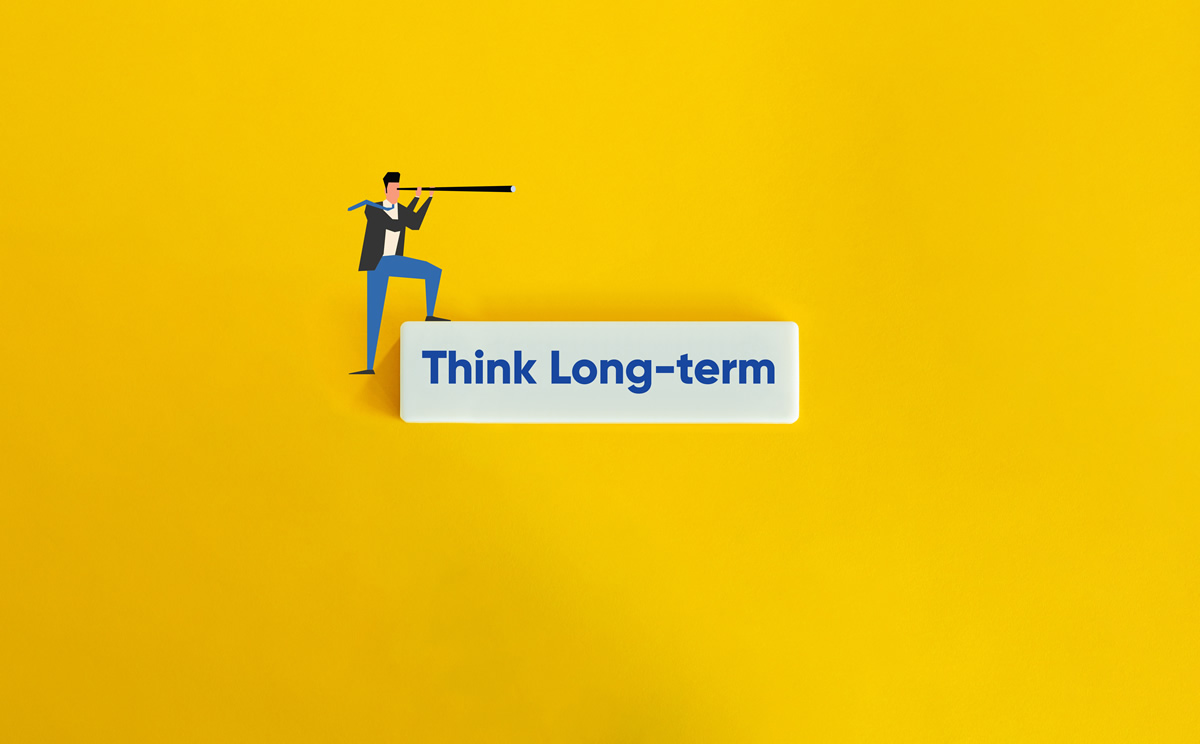
Against this volatile and disruptive backdrop, the NEXT Report stresses that risk managers must establish a longer-term risk horizon within their organizations and actively counter cognitive biases to strengthen resilience at both the company and societal levels.
The report proposes several complementary strategies for developing risk frameworks to address emerging risks. At the core of this is the adoption of a strategic foresight approach, which enables companies to extend their risk horizon. This approach involves applying techniques such as scenario planning, horizon scanning and the futures wheel—a method used to understand the potential ripple effects of specific trends. These tools help organizations explore how risks may evolve and interact under various circumstances.
Additional techniques outlined in the report include fostering a culture of long-term thinking to promote proactive risk management; redefining performance metrics to incorporate resilience and adaptation measures; and leverage technologies such as AI-driven analytics and predictive modelling.
The study also encourages organizations to embrace more holistic thinking to better recognise the increasingly interconnected and interdependent nature of risk. Further, by identifying key factors influencing each of these longer-term trends, it enables risk managers to develop credible scenarios adapted to the specific dynamics of their respective organisations.