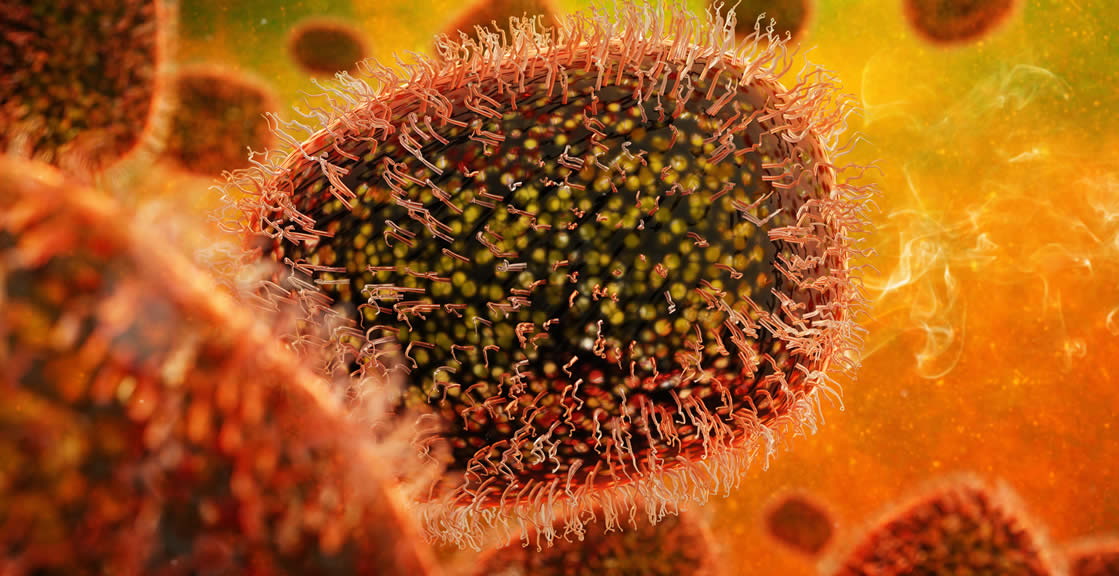
The Africa Centres for Disease Control and Prevention (Africa CDC) has officially declared that the Mpox outbreak is now a Public Health Emergency of Continental Security (PHECS). This is the first time a disease outbreak has been given this status by the Africa CDC since the launch of the agency in January 2017.
The Africa CDC says that the declaration “enables the mobilization of resources across affected countries, unlocking essential funding, strengthening Risk Communication and Community Engagement (RCCE), boosting surveillance and laboratory testing efforts, and enhancing human resource capacities to respond effectively to Mpox through a One Health approach.”
At least 13 African countries, including previously unaffected nations like Burundi, Kenya, Rwanda, and Uganda, have reported Mpox outbreaks. So far in 2024, these countries have confirmed 2,863 cases and 517 deaths, primarily in the Democratic Republic of the Congo (DRC). Suspected cases across the continent have surged past 17,000, a significant increase from 7,146 cases in 2022 and 14,957 cases in 2023. The Africa CDC says that this is “just the tip of the iceberg when we consider the many weaknesses in surveillance, laboratory testing, and contact tracing.”
“This is not just another challenge; it’s a crisis that demands our collective action,” said Dr. Jean Kaseya, Africa CDC Director General.
Appealing to global partners, he said: “We call on you to stand with us in this critical hour. Africa has long been on the frontlines in the fight against infectious diseases, often with limited resources. The battle against Mpox demands a global response. We need your support, expertise, and solidarity. The world cannot afford to turn a blind eye to this crisis.” The WHO is expected to make its own statement in response to the Africa CDC declaration but last week it took the step of issuing an invitation for manufacturers of Mpox vaccines to submit an Expression of Interest for Emergency Use Listing (EUL).
What is Mpox?
Mpox is a viral illness caused by the monkeypox virus, with two distinct clades: Clade I and Clade II. Common symptoms include a skin rash or mucosal lesions lasting 2–4 weeks, fever, headache, muscle aches, back pain, low energy, and swollen lymph nodes. The virus can be transmitted to humans through physical contact with an infectious person, contaminated materials, or infected animals. Read the WHO Mpox factsheet here.
Update
The WHO has now declared that Mpox is a public health emergency of international concern (PHEIC).
In making the announcement WHO Director-General Dr Tedros Adhanom Ghebreyesus said:
“The emergence of a new clade of Mpox, its rapid spread in eastern DRC, and the reporting of cases in several neighbouring countries are very worrying. On top of outbreaks of other Mpox clades in DRC and other countries in Africa, it’s clear that a coordinated international response is needed to stop these outbreaks and save lives.”