
Organizations need to fundamentally shift their cybersecurity strategies: away from focusing solely on preventing access and towards limiting what IT assets intruders can reach and exploit once they have achieved initial access.

A library of horizon-scanning related research, reports, and articles.
Organizations need to fundamentally shift their cybersecurity strategies: away from focusing solely on preventing access and towards limiting what IT assets intruders can reach and exploit once they have achieved initial access.
Forescout Technologies Inc. has released its 2025 Threat Roundup report, an analysis of the global threat landscape and notable trends that cyber defenders need to know in 2026.

Aon has published its annual Climate and Catastrophe Insight report, revealing that severe convective storms (SCS) have surpassed tropical cyclones to become the 21st century’s costliest insured natural disaster category.

Due to the cryptographic risks that quantum computers may introduce to financial systems, the CEG has published a roadmap to encourage a coordinated approach for financial entities’ migration to quantum-resistant cryptography and to ‘transition to cryptographic agility’.
Everbridge, Inc., has published its 2026 regional threat assessment: Geographic trends shaping the global security landscape, an analysis of the most significant threats expected to impact organizations worldwide in the year ahead.
Rachael Elliott highlights key themes from the recently published DRI 2026 Predictions Report.
The World Economic Forum has released its annual Global Risks Report, which shows that half of those surveyed anticipate a turbulent or stormy world over the next two years, up 14 percentage points from last year.
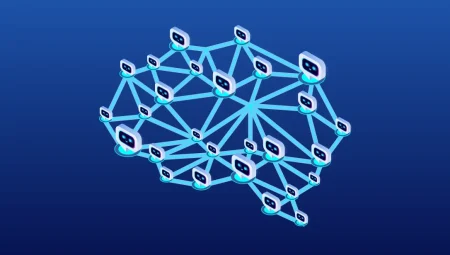
There seems little doubt that AI agents will be transformational for organizational operations in 2026, but their trusted status requires strong API governance to ensure safe use.

Netflix’s Stranger Things is a world where the mundane can suddenly become a portal to the deadly Upside Down, a perfect metaphor for the current state of the Internet of Things (IoT).
This section provides a listing of Resilience Forward stories considering how various areas related to resilience are likely to develop in 2026.