Close Menu
  • Home
  • Managing resilience
    • AI resilience
    • Business continuity
    • Business resilience
    • Climate resilience
    • C-suite and the board
    • DORA – the EU Digital Operational Resilience Act
    • Operational resilience
    • Organizational resilience
    • Supply chain resilience
    • Technology
  • Risk
    • Enterprise risk management
    • Operational risk
    • Threatscape
  • Cyber resilience
    • Cyber resilience updates
    • DORA – the EU Digital Operational Resilience Act
    • Product updates
More items
  • All News
  • Research
  • Jobs in Resilience
  • Resilience Resources
  • About Resilience Forward
X (Twitter) LinkedIn
  • Home
  • Managing resilience
    • AI resilience
    • Business continuity
    • Business resilience
    • Climate resilience
    • C-suite and the board
    • DORA – the EU Digital Operational Resilience Act
    • Operational resilience
    • Organizational resilience
    • Supply chain resilience
    • Technology
  • Risk
    • Enterprise risk management
    • Operational risk
    • Threatscape
  • Cyber resilience
    • Cyber resilience updates
    • DORA – the EU Digital Operational Resilience Act
    • Product updates
Login
LinkedIn Bluesky
Resilience Forward
Subscribe Now
  • All News
  • Research
  • Jobs in Resilience
  • Resilience Resources
  • About Resilience Forward
Resilience Forward
You are at:Home»Managing resilience»Technology»Better late than never? Welcome to the SaaS backup space, Microsoft (Page 15)
Technology

Better late than never? Welcome to the SaaS backup space, Microsoft

A preview version of Microsoft 365 Backup is currently available, with general availability expected to be mid-2024. Microsoft entering the backup space proves the point the data protection community has been making for a long time, says Paul Robichaux.
March 28, 20244 Mins Read
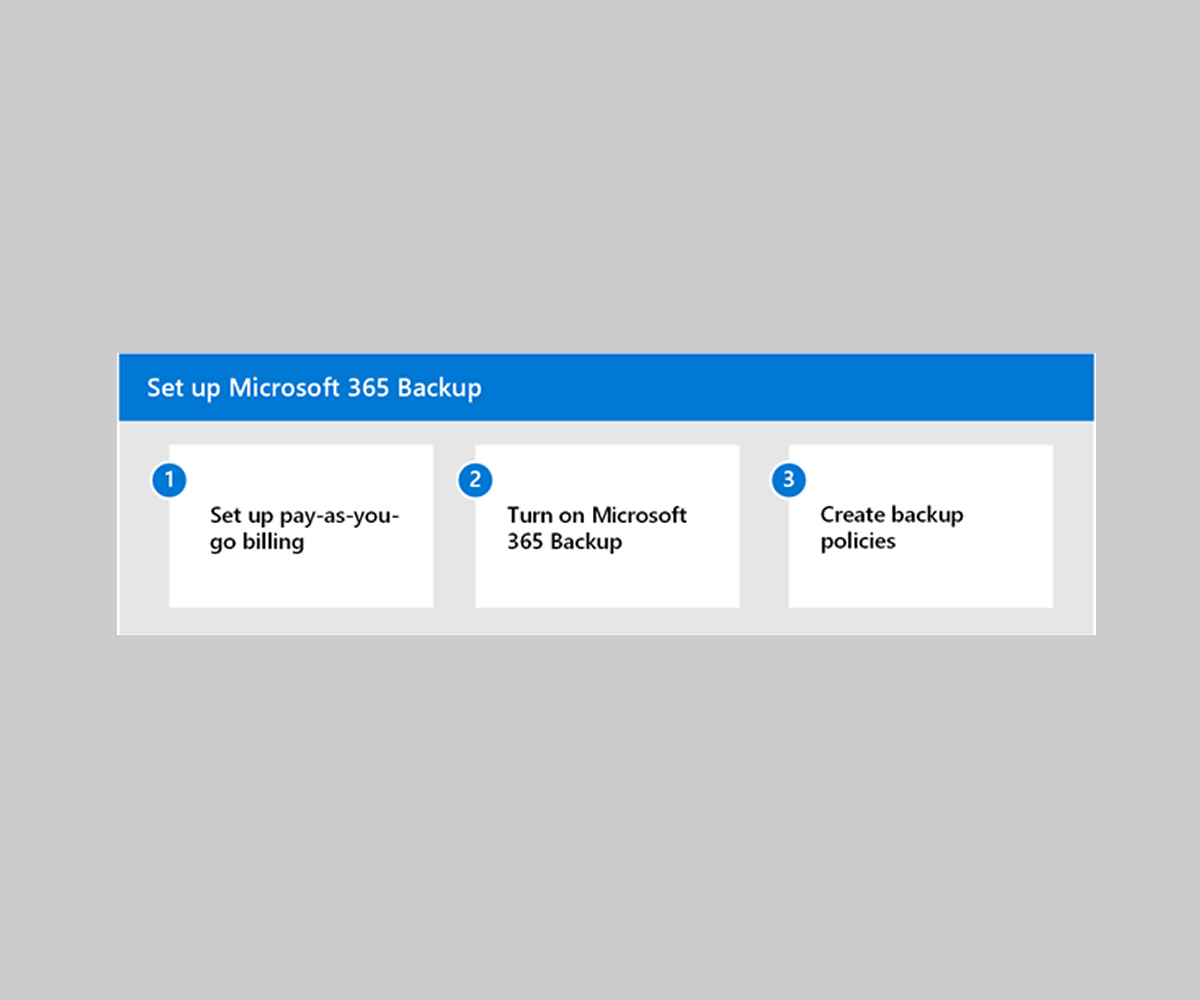
Microsoft 365 Backup preview is now available.

With Microsoft announcing its release plans for its Microsoft 365 Backup service, what better time than now to share some takeaways and what I believe this milestone means for SaaS data protection now and going forward?

Welcome. And we kinda told you so…

What have we been saying, exactly?

That you need to back up your Microsoft 365 data! Microsoft is not responsible for your data, you are.

Why have we been saying that?

Well, we know that an overwhelming percentage of Microsoft’s enterprise customers have no backup for their Microsoft SaaS usage. That’s because Microsoft promises to not lose all your data. 

With that in mind, customers’ reasoning is – and I meet this in organizations all over the world, all the time – that cloud SaaS data doesn’t need backup at all, because Microsoft won’t lose it.

And that’s simply not correct. In the backup and recovery space, we’ve been trying to get that message across for many, many, years.

This popular perception is a real problem – to the organizations who fail to protect their data, to their customers and users, and to the communities they play a role in.

That’s basically all of us. Consequently, it’s in the interest of all of us to bring that number down to boost the cyber resilience of, say, critical infrastructure and critical services, and everything else we rely on in our lives.

How does Microsoft releasing its own solution help drive the message across?

Or: What does Microsoft 365 Backup mean for SaaS data backup?

Well, all the vendors in this space have long had to challenge the popular notion that data in the cloud was, by default, automatically and perfectly protected.

And many of us have talked at length about Microsoft’s shared responsibility model where Microsoft clearly states that the customer is responsible for backup of information and data, including devices, accounts, and identities.

The introduction of Microsoft 365 Backup marks the start of Microsoft’s journey into protecting your Microsoft 365 data against other threats, including malicious attacks, mistakes, misbehaving automations, and other misfortunes.

And that’s great. But it’s early days yet – with no backup for Entra ID, Teams, or Power Platform and low restore granularity, third-party backup is still very relevant. As always, it’s crucial to have those backups separated physically and logically from the Microsoft infrastructure. You don’t leave your spare key in the car, after all.

The optimist in me hopes that now, with Microsoft developing its own backup service, we can finally put the shared responsibility model into its proper perspective and get protection for the many enterprise customers who don’t have it today.

We can now start the burial service for the original “I don’t need backup” objection. That frees us to skip over the boring question of whether or not you should backup Microsoft 365 data, then jump into the interesting conversations.

For example:

  • What do you need to back up? Entra ID is the control plane for your entire Microsoft 365 tenant – it’s your identities, permissions, policies. So that’s an example of something that’s kind of nice to have access to.
  • And how should you backup? What are the most important criteria for good backup? That it’s completely separate from your production environment? That the data can’t be tampered with? That recovery is fast and precise? Just some thoughts.

Anyway: it’s great to see a newly awakened interest in data protection because of this release. And I’m optimistic that it will mature the conversations out there.


The author

Paul Robichaux, Microsoft MVP and Keepit Senior Director of Product Management.

Paul Robichaux is a Microsoft MVP (Most Valuable Professional) —  a title he has been awarded every year since 2003. Paul has worked in IT since 1978 and has held a number of CTO and senior product development positions in the software industry. He is also Senior Director of Product Management at SaaS data protection provider Keepit.

Paul is a prolific contributor to the Microsoft community: he is the author of an impressive number of books and articles about Microsoft technologies, including the best-selling Office 365 for IT Pros, a contributing editor for Practical 365, and produces a continuous stream of videos, podcasts, and webinars. 

Paul is based in Alabama in the United States.

Find Paul on LinkedIn and X.

Share. Facebook Twitter Pinterest LinkedIn Tumblr Email WhatsApp
Previous ArticleThe future of backups: from business continuity fundamental to top attack target
Next Article Cybersecurity, Audit and the Board: advanced cyber security is linked to high shareholder returns

Related Posts

An exploding digital padlock illustrates the requirement for post-quantum cryptography.

Research breakthrough brings reliable quantum computers and Q-day closer to reality

September 10, 2026
A danger sign on a digital background.

New blob URL phishing technique evades detection by using legitimate Microsoft services

September 10, 2026
AI risks

Unmanaged AI workflows expose EMEA organizations to rising compliance and data risks

September 9, 2026
City skyline at sunset with bright light trails and a translucent blue smart-city grid overlay and GPS pins indicating locations.

AI world models: future possibilities for organizational resilience?

September 7, 2026
DRJ and BCI logos

DRJ and BCI publish guidance for governing, managing, and using AI in resilience

September 7, 2026
Decision making with over whelming information.

AI can find the vulnerability. Accountability still sits with your crisis leadership

September 7, 2026
Advertisement
Resilience First
This week's most read articles
Under pressure: An egg cracking under pressure applied by squeezing clamps form the sides.

Managing scenario testing for operational resilience

May 16, 2024
COSO logo

New COSO ERM guidance aims to help organizations with practical implementation

May 12, 2026
Close-up of a green-brown iris peering through a jagged tear in dark paper or wall material.

The blind spots in business continuity

September 2, 2026
Latest resources
The word Glossary surrounded by letter tiles to illustrate The International Resilience Glossary.

DRI International publishes updated International Glossary for Resilience

February 27, 2026
Load More

Subscribe to Updates

Get our Resilience Updates newsletter.

Most Popular Feature Articles
Three dark coloured light bulbs on a black background illustrate the concept of The Dark Triad in Crisis Management.

The Dark Triad in crisis management

Five stage crisis management framework

A five stage framework for a crisis management process

Blue interconnected gears and network nodes symbolizing automation and complex machinery.

Agent zero – the 2028 digital pandemic

Latest Reports
A futuristic red warning alert icon with glowing exclamation mark.

Cloud Security Alliance publishes Hugging Face Incident Initial Post-Mortem

A person hold a building door open for a person behind who is tailgating to get unauthorised access.

Security Culture: A Strategic Capability That Builds Resilience in a Volatile World

An identity icon with a map marker on it, indicating the concept of identity as a target for attackers. The icon is on a generic IT background predominantly in black and orange.

Identity-based approaches dominate initial access for ransomware attacks

A promo box for an article about resilience governance.
© 2026 Resilience Forward
  • About Resilience Forward
  • Newsletter
  • Newsfeed
  • Advertise
  • Call for Papers
  • Contact
  • Privacy Policy and Cookie Use
  • AI Use Policy

Type above and press Enter to search. Press Esc to cancel.

Manage Cookie Consent
To provide the best experiences, we use technologies like cookies to store and/or access device information. Consenting to these technologies will allow us to process data such as browsing behaviour or unique IDs on this site. Not consenting or withdrawing consent, may adversely affect certain features and functions.
Functional Always active
The technical storage or access is strictly necessary for the legitimate purpose of enabling the use of a specific service explicitly requested by the subscriber or user, or for the sole purpose of carrying out the transmission of a communication over an electronic communications network.
Preferences
The technical storage or access is necessary for the legitimate purpose of storing preferences that are not requested by the subscriber or user.
Statistics
The technical storage or access that is used exclusively for statistical purposes. The technical storage or access that is used exclusively for anonymous statistical purposes. Without a subpoena, voluntary compliance on the part of your Internet Service Provider, or additional records from a third party, information stored or retrieved for this purpose alone cannot usually be used to identify you.
Marketing
The technical storage or access is required to create user profiles to send advertising, or to track the user on a website or across several websites for similar marketing purposes.
  • Manage options
  • Manage services
  • Manage {vendor_count} vendors
  • Read more about these purposes
View preferences
  • {title}
  • {title}
  • {title}
Manage Cookie Consent
To provide the best experiences, we use technologies like cookies to store and/or access device information. Consenting to these technologies will allow us to process data such as browsing behaviour or unique IDs on this site. Not consenting or withdrawing consent, may adversely affect certain features and functions.
Functional Always active
The technical storage or access is strictly necessary for the legitimate purpose of enabling the use of a specific service explicitly requested by the subscriber or user, or for the sole purpose of carrying out the transmission of a communication over an electronic communications network.
Preferences
The technical storage or access is necessary for the legitimate purpose of storing preferences that are not requested by the subscriber or user.
Statistics
The technical storage or access that is used exclusively for statistical purposes. The technical storage or access that is used exclusively for anonymous statistical purposes. Without a subpoena, voluntary compliance on the part of your Internet Service Provider, or additional records from a third party, information stored or retrieved for this purpose alone cannot usually be used to identify you.
Marketing
The technical storage or access is required to create user profiles to send advertising, or to track the user on a website or across several websites for similar marketing purposes.
  • Manage options
  • Manage services
  • Manage {vendor_count} vendors
  • Read more about these purposes
View preferences
  • {title}
  • {title}
  • {title}
Ad Blocker Enabled!
Ad Blocker Enabled!
Our website is made possible by displaying online advertisements to our visitors. Please support us by disabling your Ad Blocker.

Sign In or Register

Welcome Back!

Login to your account below.

Lost password?



