In 2024, severe floods in Europe and the UAE resulted in estimated insured losses of close to USD 13 billion to date. It was the third-costliest year for this threat globally and the second costliest for Europe, which experienced insured losses of approximately USD 10 billion, according to estimates in an annual review of natural disasters by Swiss Re Institute.
Intense precipitation in April caused floods in the Gulf region, disrupting the operations of the world’s busiest airport in Dubai. In September, Storm Boris caused major floods in Central Europe, mainly affecting the Czech Republic, Poland, and Austria. Additional impacts were reported from Slovakia, Romania, Italy, and Croatia. While so-called Vb lows – slow-moving, low-pressure systems – are nothing unusual in the region, the strong intensity of the Vb system connected to Storm Boris was favoured by conditions related to climate change. Storm Boris mixed cold Arctic air flowing southwards with unusually warm air from the east and south, drawing moisture from a record-breaking warm Mediterranean Sea.
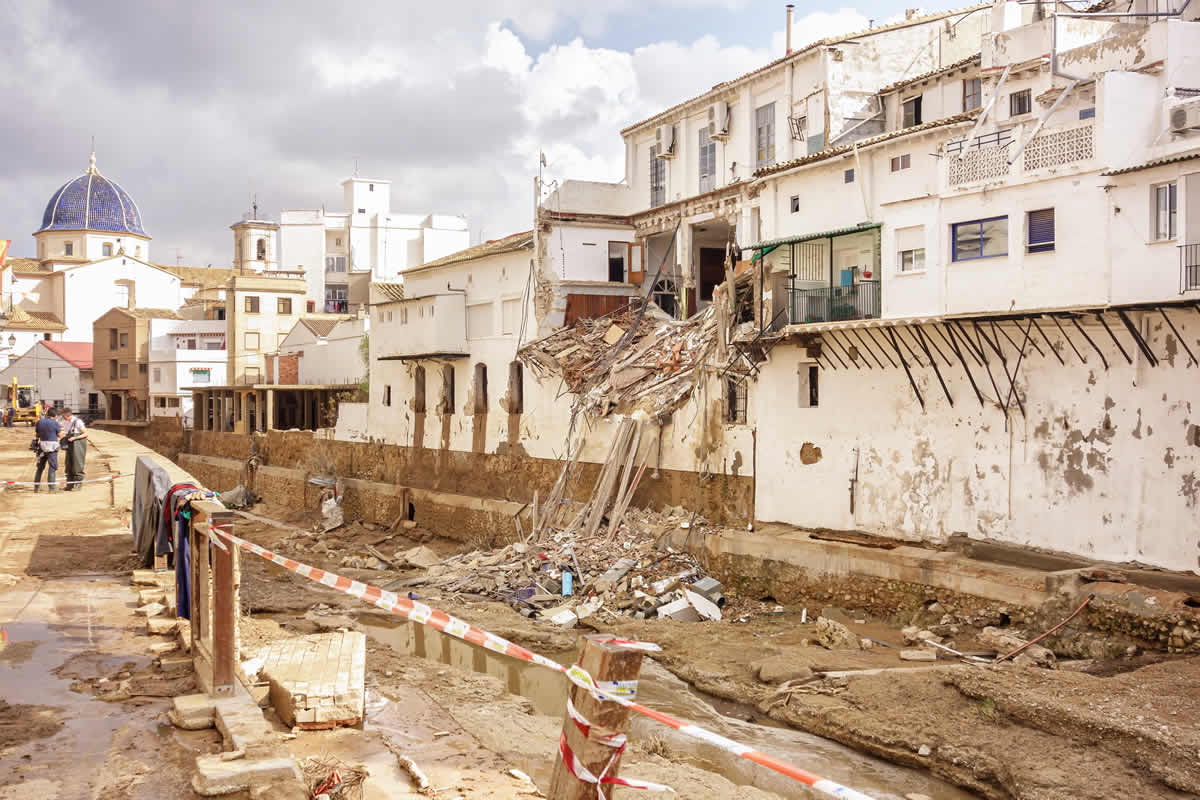
In October, large parts of Spain experienced heavy rainfall, flash floods and hailstorms, which caused severe damage. The floods were worst in eastern and southern Spain, with most of the damage across the Valencia and Castilla-La Mancha regions. Andalusia and the Balearic Islands were also affected. One year’s average precipitation was dumped in less than eight hours in many locations. Steep clay terrain and drainage systems could not absorb the exceptional amount of water, leading to fast overflows.
Floods come in varied forms. The most common are fluvial and pluvial floods, and in coastal areas, storm surge floods. Fluvial floods can happen after periods of heavy rainfall. They usually affect areas close to rivers where flood waves can build up gradually or rapidly and last for a longer period. Pluvial floods can happen anywhere and affect all kinds of areas. Urban areas are at particular risk because large parts of soil are sealed and therefore cannot absorb the excess of water when drainage systems become overwhelmed.
Flood-related losses are likely to increase as climate change intensifies extreme weather events while asset values increase in high-risk areas due to urban sprawl. Adaptation is therefore key to resilience, says the Swiss Re Institute, and protective measures, such as dykes, dams, and flood gates, are up toten times more cost-effective than rebuilding.