Close Menu
  • Home
  • Managing resilience
    • AI resilience
    • Business continuity
    • Business resilience
    • Climate resilience
    • C-suite and the board
    • DORA – the EU Digital Operational Resilience Act
    • Operational resilience
    • Organizational resilience
    • Supply chain resilience
    • Technology
  • Risk
    • Enterprise risk management
    • Operational risk
    • Threatscape
  • Cyber resilience
    • Cyber resilience updates
    • DORA – the EU Digital Operational Resilience Act
    • Product updates
More items
  • All News
  • Research
  • Jobs in Resilience
  • Resilience Resources
  • About Resilience Forward
X (Twitter) LinkedIn
  • Home
  • Managing resilience
    • AI resilience
    • Business continuity
    • Business resilience
    • Climate resilience
    • C-suite and the board
    • DORA – the EU Digital Operational Resilience Act
    • Operational resilience
    • Organizational resilience
    • Supply chain resilience
    • Technology
  • Risk
    • Enterprise risk management
    • Operational risk
    • Threatscape
  • Cyber resilience
    • Cyber resilience updates
    • DORA – the EU Digital Operational Resilience Act
    • Product updates
Login
LinkedIn Bluesky
Resilience Forward
Subscribe Now
  • All News
  • Research
  • Jobs in Resilience
  • Resilience Resources
  • About Resilience Forward
Resilience Forward
You are at:Home»Risk»Threatscape»The changing threat landscape: civil unrest and protest activity is an increasing concern
Threatscape

The changing threat landscape: civil unrest and protest activity is an increasing concern

April 9, 20253 Mins Read
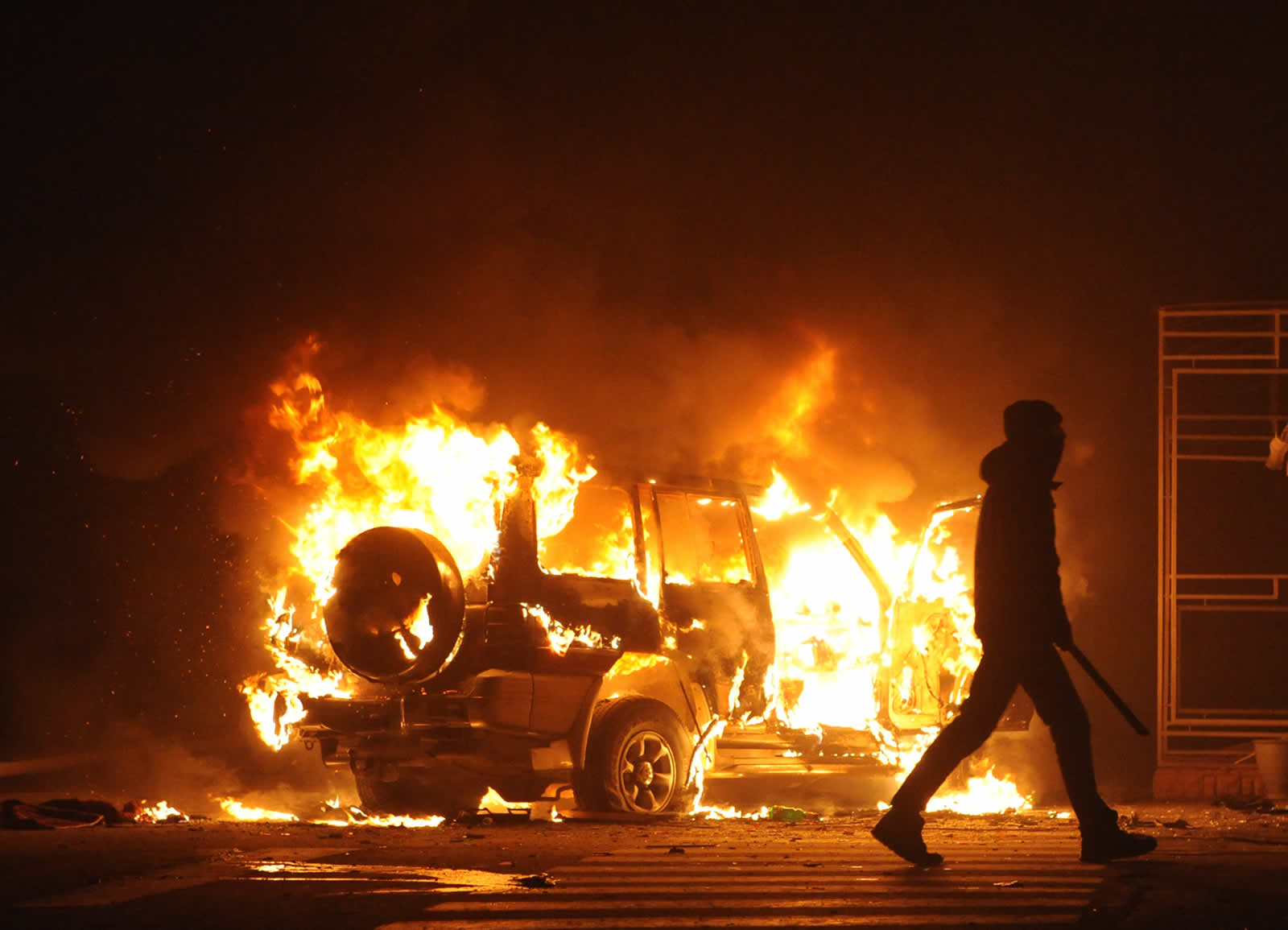
a silhouetted person walks past a burning car in the dark.

According to a new report from Allianz Commercial, civil unrest ranks as the biggest concern for more than 50% of company respondents globally, reflecting the fact that incidents in this area are increasing and lasting for longer.

Political violence and civil unrest trends 2025 states that following the ‘super election year’ in 2024, policy changes by governments will continue to be trigger factors for protests and flashpoints in many countries, as could any economic hardships that result from tariff wars.

In addition, an increase in terrorist attacks from religious and political extremists – motivated by both far-right and left ideologies – is also a major concern for businesses over the year ahead. Companies need to adapt to volatile and uncertain geopolitical conditions to avoid negative surprises and mitigate risks.

Political violence activity can impact businesses in many ways. In addition to endangering the safety of employees and customers, those in the immediate vicinity of unrest can suffer business interruption losses and material damage to property or assets.

Srdjan Todorovic, Head of Political Violence and Hostile Environment Solutions at Allianz Commercial

Civil unrest now the major political violence concern for businesses around the globe

Businesses are more concerned about the disruptive impact of anti-social behaviour on their operations than that of any other political violence and terrorism exposure. The impact of civil unrest or strikes, riots and civil commotion (SRCC) activity also ranks as the top concern in countries such as Colombia, France, South Africa, the UK, and the US. In the top 20 countries for frequency of protest and riot activity around the world during 2024, there were more than 80,000 incidents alone, with India, US, France, Germany, Türkiye, and Spain among the hotspots, according to Allianz Research.

It is a view also shared by insurers who have seen the SRCC peril increase in frequency and severity in recent years. Events including riots in Chile and South Africa have contributed to insured losses well in excess of US$10bn over the past decade, surpassing other levels of political violence and terrorism insurance claims. In certain hotspot territories losses can rival or surpass those from natural catastrophes, while in others, although the direct impact may be minor, events can still trigger long-lasting changes in the societies they affect.

Religious and political terrorism on the rise

The increasing frequency of plots and attacks from Islamist groups and inspired individuals, as well as supporters of the far right and far left movements are among the factors driving the complex global landscape. A growing concern is the Islamist terrorism threat in Europe, with an increasing number of attacks or plots happening over the last 12 months. Terrorist attacks jumped by 63% in the West with Europe most affected with attacks doubling to 67. At the same time, analysis shows there were more than 100 reported terrorism and right-wing extremist incidents during 2024, driven primarily by events in the US, followed by Germany.  Meanwhile, far-left extremists are targeting individuals or companies who they see as contributing negatively towards issues such as climate change or inequality.


Read the report (PDF)

Africa Asia Asia Pacific Australasia Europe Middle East North America UK
Share. Facebook Twitter Pinterest LinkedIn Tumblr Email WhatsApp
Previous ArticleAre Trump’s tariffs a Grey Rhino? And how can organizations prepare for such crises?
Next Article Resilience First event explores the use of AI within organizational resilience

Related Posts

Geopolitical risks

Geopolitical conflict is increasingly reshaping how organizations manage people, operations, and risk

November 9, 2026
Abstract network of interconnected nodes and lines in blue.

Everbridge publishes its 2027 Global Risk & Resilience Outlook

November 9, 2026
AI agent in action concept.

Lack of clear activity baselines makes it harder to manage AI agent resilience and security

November 9, 2026
Weathered European Union Flag in Sunlight. Grunge Texture Symbolizing Unity, Resilience, and Endurance.

European Commission unveils new guidelines to boost community preparedness and resilience

November 4, 2026
ASIS logo

ASIS International releases revised Workplace Violence Prevention and Intervention Standard

November 4, 2026
An AI agent icon lying on its side with eyes shut showing the concept of a deactivated agent.

New report reveals major operational resilience gaps in agentic AI adoption

November 4, 2026
Advertisement
Resilience First
This week's most read articles
AI agent in action concept.

Lack of clear activity baselines makes it harder to manage AI agent resilience and security

November 9, 2026
Two different jigsaw pieces.

KPMG Risk & Resilience Survey finds that half of organizations have yet to integrate risk and resilience management

March 12, 2025
A swirl of sand around a rock to show the concept of flexibility.

Organizational flexibility:  developing and managing the ability to be flexible

July 2, 2026
Latest resources
A defrosting retail fridge with water dripping out of the bottom and condensation on the glass.

Protective responses to the refrigeration attacks in Europe

November 4, 2026
Load More

Subscribe to Updates

Get our Resilience Updates newsletter.

Most Popular Feature Articles
Five stage crisis management framework

A five stage framework for a crisis management process

Three dark coloured light bulbs on a black background illustrate the concept of The Dark Triad in Crisis Management.

The Dark Triad in crisis management

Blue interconnected gears and network nodes symbolizing automation and complex machinery.

Agent zero – the 2028 digital pandemic

Latest Reports
An AI agent icon lying on its side with eyes shut showing the concept of a deactivated agent.

New report reveals major operational resilience gaps in agentic AI adoption

Two hands form a rectangular frame around the sun in a bright sky over distant mountains.

BCI Future of Resilience Report points to a more strategic future for resilience

Global risks concept

UN report warns that the global risk landscape is being redrawn

A promo box for an article about resilience governance.
© 2026 Resilience Forward
  • About Resilience Forward
  • Newsletter
  • Newsfeed
  • Advertise
  • Call for Papers
  • Contact
  • Privacy Policy and Cookie Use
  • AI Use Policy

Type above and press Enter to search. Press Esc to cancel.

Manage Cookie Consent
To provide the best experiences, we use technologies like cookies to store and/or access device information. Consenting to these technologies will allow us to process data such as browsing behaviour or unique IDs on this site. Not consenting or withdrawing consent, may adversely affect certain features and functions.
Functional Always active
The technical storage or access is strictly necessary for the legitimate purpose of enabling the use of a specific service explicitly requested by the subscriber or user, or for the sole purpose of carrying out the transmission of a communication over an electronic communications network.
Preferences
The technical storage or access is necessary for the legitimate purpose of storing preferences that are not requested by the subscriber or user.
Statistics
The technical storage or access that is used exclusively for statistical purposes. The technical storage or access that is used exclusively for anonymous statistical purposes. Without a subpoena, voluntary compliance on the part of your Internet Service Provider, or additional records from a third party, information stored or retrieved for this purpose alone cannot usually be used to identify you.
Marketing
The technical storage or access is required to create user profiles to send advertising, or to track the user on a website or across several websites for similar marketing purposes.
  • Manage options
  • Manage services
  • Manage {vendor_count} vendors
  • Read more about these purposes
View preferences
  • {title}
  • {title}
  • {title}
Ad Blocker Enabled!
Ad Blocker Enabled!
Our website is made possible by displaying online advertisements to our visitors. Please support us by disabling your Ad Blocker.

Sign In or Register

Welcome Back!

Login to your account below.

Lost password?